

How the SCO chips away at US power without an alliance system
Summarized by DistantNews. Read the original for the full story.
At a glance
Analysis
Sources not specified
Context piece
- The Shanghai Cooperation Organisation has expanded from a border-management mechanism into a grouping of 10 full members representing more than 3.4 billion people and about one-quarter of global GDP.
- Its anniversary summit takes place as the Russia-Ukraine war remains unresolved and conflict involving Iran and the United States affects strategic competition and energy security.
- The SCO lacks NATO’s military command and the European Union’s supranational institutions, but offers states a forum to coordinate without a formal alliance.
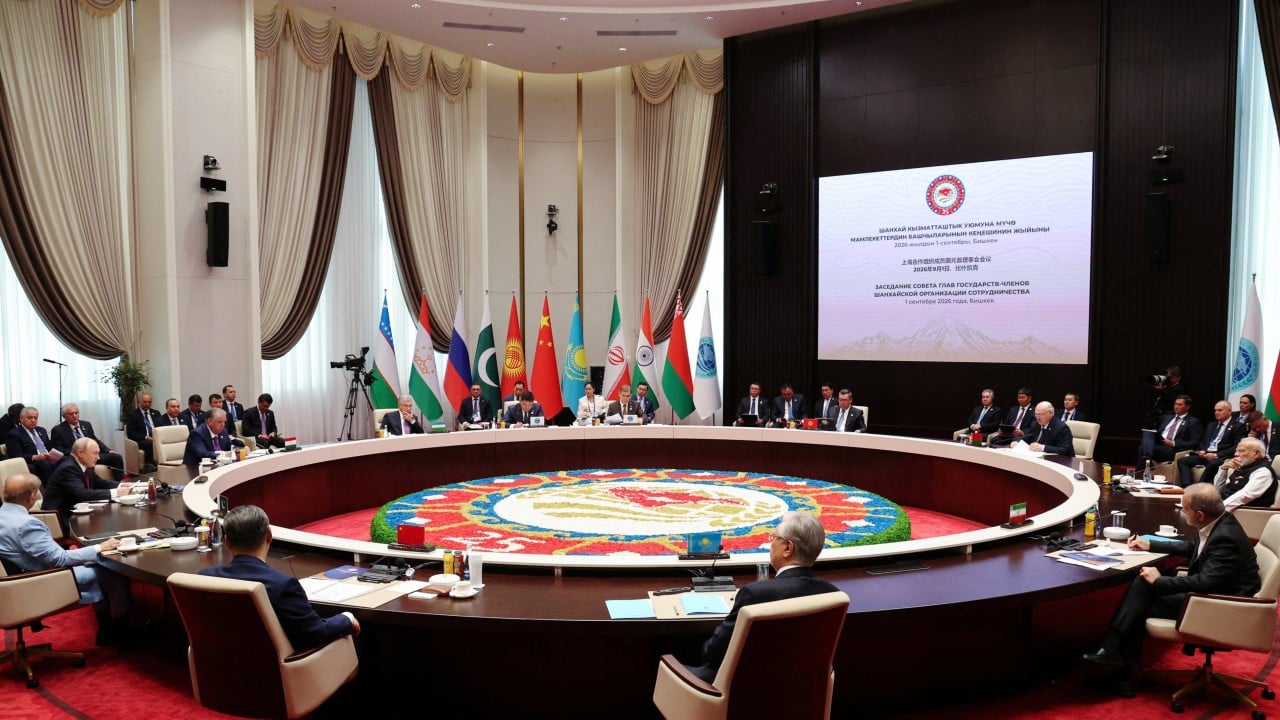
The Shanghai Cooperation Organisation began 25 years ago as a modest arrangement for managing borders between China, Russia and four Central Asian states. At its anniversary summit in Bishkek, it presents a much harder proposition for the United States to dismiss.
The organisation now includes China, Russia, India, Iran, Pakistan, most Central Asian republics and Belarus. Turkey and several Gulf states participate as partners. Its 10 full members represent more than 3.4 billion people and roughly a quarter of the world economy.
The timing gives the grouping added weight. Russia’s invasion of Ukraine remains unresolved, while the war between Iran and the United States has made the Persian Gulf another arena of strategic competition. Energy markets face renewed exposure to disruption around the Strait of Hormuz.
Chinese President Xi Jinping has urged the SCO to take on a larger role in technology and security and to help build a “universally secure environment”. He describes the organisation as a model for cooperation without formal alliances, confrontation or targeting third parties, with an emphasis on development, security, people’s well-being and dialogue.
That does not make the SCO an anti-American alliance. India and China remain strategic competitors, India and Pakistan have longstanding tensions, and Central Asian governments seek room to manoeuvre among Moscow, Beijing, Ankara, Brussels and Washington. Turkey is still a NATO member while pursuing a broader Eurasian role.
The SCO has neither NATO’s military command nor the European Union’s supranational institutions. Its practical value lies elsewhere: it gives governments that do not want Washington to define their foreign policy a place to coordinate, negotiate and hedge.
universally secure environment
About this summary
Originally published by South China Morning Post. Summarized and contextualized automatically by DistantNews, with a note on how the source frames the story. Not individually reviewed before publishing. How this works.
More Stories
From Our Blog

Countries Without a Free Press: What You Need to Know

What Press Freedom Means for the News You Read

What Gets Lost (and Found) When News Is Translated

The Critical Role of Diaspora Media in Global News

What Travellers Should Know About Countries with Restricted Press
