

/nginx/o/2026/06/16/17722067t1h7a05.jpg)
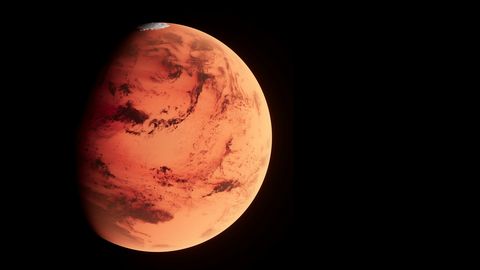
How to make Mars like Earth? Is it even possible?
Translated from Estonian, summarized and contextualized by DistantNews.
At a glance
News
Sources not specified
Context piece
- Scientists have investigated the physical possibility of terraforming Mars, a concept long explored in science fiction.
- A new study by the University of Chicago avoids ethical debates to focus solely on the feasibility of making Mars Earth-like.
- The research addresses whether Mars can be made more similar to Earth, a question that has been debated since Carl Sagan's initial proposals.
Humanity has long dreamed of colonizing Mars, but the physical possibility of terraforming the Red Planet remained uncertain until now. A new study by scientists at the University of Chicago aims to settle this question by focusing purely on the technical feasibility, sidestepping the ethical debates that often surround such ambitious endeavors.
The concept of making Mars more Earth-like has been a staple of science fiction, notably in Kim Stanley Robinson's "Mars Trilogy." Carl Sagan first proposed the idea in the 1970s, sparking decades of discussion about both the potential benefits and drawbacks of such a transformation. However, a significant portion of the public and scientific community has always questioned whether it should be done at all.
This latest research, published on the preprint server arXiv by Edwin Kite and his colleagues, deliberately avoids delving into the moral or ethical implications. Instead, it provides a thorough analysis of whether terraforming Mars is physically achievable. The study seeks to answer the fundamental question: can Mars be made more similar to Earth, and if so, how?
DistantNews Editorial
Originally published by Postimees in Estonian. Translated, summarized, and contextualized by our editorial team with added local perspective. Read our editorial standards.
More Stories
/nginx/o/2025/12/12/17335116t1hab13.jpg)
/nginx/o/2026/06/09/17702101t1hcd68.jpg)
From Our Blog

What Gets Lost (and Found) When News Is Translated

The Critical Role of Diaspora Media in Global News

What Travellers Should Know About Countries with Restricted Press

A Digital Nomad's Guide to Following Local News

How the Same Story Looks Different in Different Countries
