


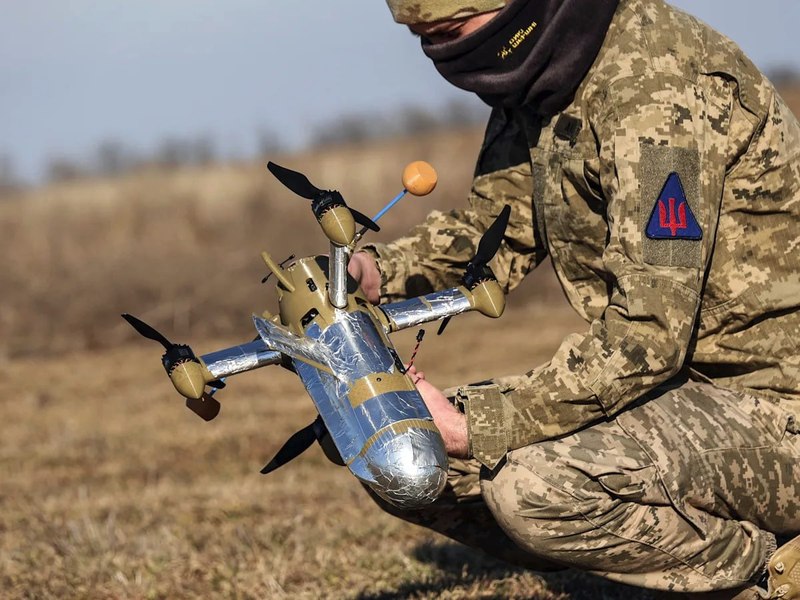
How Ukrainians Are Prepared to Hunt 'Shahed' Drones and How Difficult It Is
Translated from Romanian, summarized and contextualized by DistantNews.
At a glance
News
Sources not specified
Ongoing story
- Ukraine is rapidly training new operators to counter Russia's increasing use of Shahed kamikaze drones.
- Former gamers, IT specialists, and wounded soldiers are being transformed into drone hunters.
- Training centers, run by the military and volunteer organizations, are crucial for developing these specialized crews.
As Russia launches an escalating number of kamikaze drones against Ukrainian cities, Ukraine's air defense forces are adapting swiftly, with drone-interceptors and their operators playing an increasingly vital role.
The Ukrainian military and volunteer organizations are accelerating the training of new operators to combat the growing threat. Former gamers, IT specialists, and wounded soldiers are being repurposed and trained as "Shahed" hunters.
An interceptor drone crew typically consists of three to four individuals: pilots, navigators, technicians, and sometimes drivers. The effectiveness of these teams directly impacts the safety of civilians in numerous Ukrainian cities. The number of Russian "Shahed" drones is rising monthly, necessitating a larger pool of skilled operators capable of intercepting them.
To meet this demand, the army, volunteers, and drone manufacturers have established training centers. These centers transform individuals with backgrounds in gaming or IT, or soldiers injured on the front lines, into specialized drone hunters. Some injured soldiers who can no longer serve on the front lines are trained as technicians, working on launch sites and configuring equipment, allowing them to remain active in the defense system.
Candidates are drawn from both active military personnel, particularly pilots with experience on FPV or reconnaissance drones, and civilian recruits. Civilian recruits are often chosen for their technological familiarity and rapid adaptation skills. For instance, at the training center of the Serghei Pritula Foundation, operators are trained for two types of drones: Sting multicopters used against "Shahed" drones and other types of drones.
Sometimes people come who, due to injuries, can no longer become pilots. They may have amputated fingers or tremors after severe concussions. For them, we have technician training: they work on the polygon, assemble catapults, antennas, launch platforms, and learn to configure the equipment.
DistantNews Editorial
Originally published by Adevărul in Romanian. Translated, summarized, and contextualized by our editorial team with added local perspective. Read our editorial standards.
More Stories

From Our Blog

What Gets Lost (and Found) When News Is Translated

The Critical Role of Diaspora Media in Global News

What Travellers Should Know About Countries with Restricted Press

A Digital Nomad's Guide to Following Local News

How the Same Story Looks Different in Different Countries
