

Huge blankets of seaweed are smothering coastlines from the Caribbean to Mexico
Summarized and contextualized by DistantNews.
At a glance
News
From a news agency
Context piece
- Massive amounts of sargassum seaweed are blanketing beaches in the Caribbean and Gulf of Mexico, harming marine life and deterring tourists.
- Scientists have recorded 27 million metric tons of sargassum in the Atlantic, Caribbean, and Gulf of Mexico as of July, noting a new local reproduction cycle.
- Mexico plans to invest $115 million to combat the algae, which is significantly impacting tourism-dependent economies.
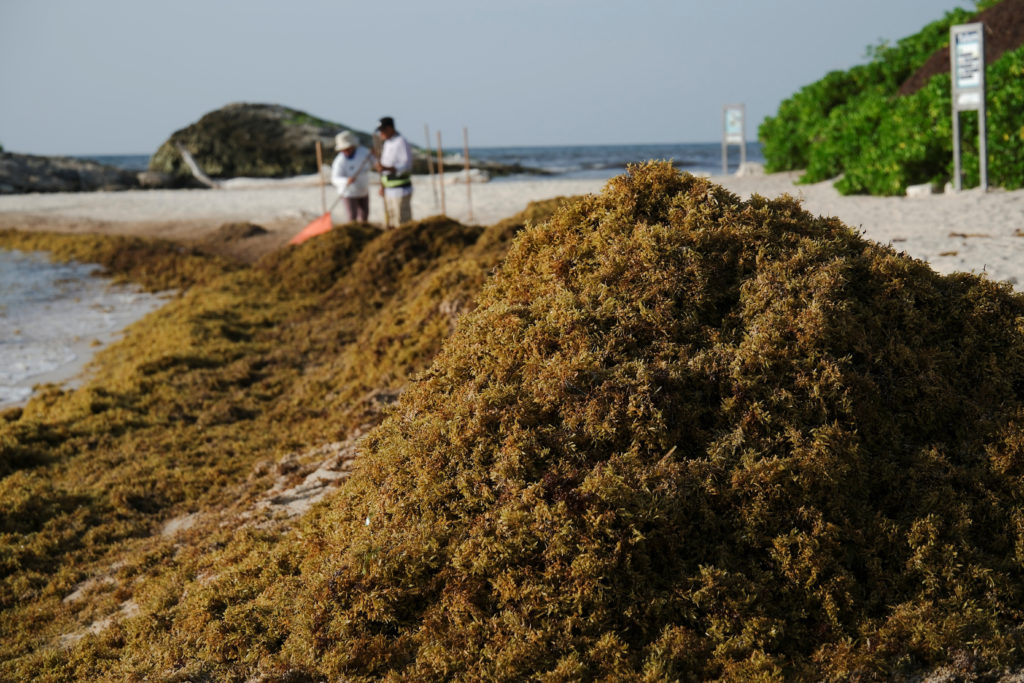
Beaches and coastlines across the Caribbean and the Gulf of Mexico are being suffocated by vast swathes of sargassum seaweed, a phenomenon that is decimating marine life and deterring visitors in areas heavily reliant on tourism. According to a report released Friday by the University of South Florida's Optical Oceanography Lab, approximately 27 million metric tons of sargassum have been recorded in the Atlantic, Caribbean, and Gulf of Mexico as of July. This invasive seaweed releases a foul odor as it decomposes onshore, covering miles of coastline. Notably, scientists have observed sargassum reproducing in large quantities within these regions for the first time, rather than simply being swept in by ocean currents. Brian Barnes, a marine scientist and research assistant professor at the University of South Florida, stated, "None of this is normal." He explained that the Great Atlantic Sargassum Belt, which has been growing since 2011, is dumping increasing amounts of seaweed along coastlines. Experts suggest that factors such as agricultural runoff, warming waters, and changes in wind and current patterns could be contributing to the problem. The current bloom is linked to a record 40 million metric tons reported last year, with Barnes noting, "The 2025 bloom was so big it never really left. It was enough to start a new bloom locally." Sargassum levels in the Caribbean reached record highs in June, while the Gulf of Mexico recorded 5 million metric tons in the same month, nearly double the previous year's record. Scientists anticipate 2026 will see the second-largest amount of sargassum recorded in the Atlantic, Caribbean, and Gulf of Mexico. Mexico announced on Thursday its intention to invest $115 million to address the blooming algae, which poses a significant environmental and economic threat. The government estimates that up to 9,000 tons can reach its Caribbean coastline on the worst days, but current resources only allow for the collection of about 1,200 tons per day. In the popular tourist town of Playa del Carmen, the impact is starkly visible. Alan Vázquez, a waiter, closed his restaurant early one evening due to a complete lack of customers. He had hoped to salvage the day with a tip, but the decomposing sargassum has turned the famed turquoise waters black, driving tourists away. "It's sad that such a beautiful and lively place...has ended up like this," Vázquez said, fearing he might suffer the same fate as four colleagues who were laid off.
None of this is normal. Every year is a little bit of a new story.
DistantNews Editorial
Originally published by PBS NewsHour. Summarized and contextualized by our editorial team with added local perspective. Read our editorial standards.
More Stories


From Our Blog

How the Same Story Looks Different in Different Countries

What Gets Lost (and Found) When News Is Translated

The Critical Role of Diaspora Media in Global News

What Travellers Should Know About Countries with Restricted Press

A Digital Nomad's Guide to Following Local News
