


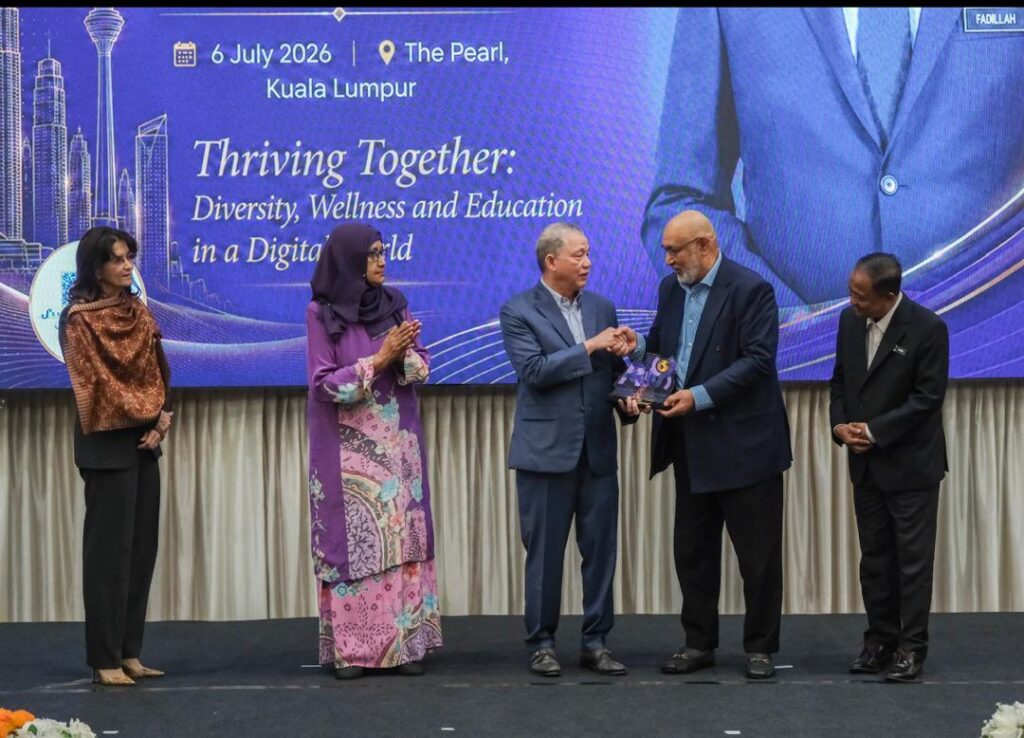
Human Capital Quality, Not Just Economy, Determines National Success: Deputy PM
Translated from Malay, summarized and contextualized by DistantNews.
At a glance
News
Sources not specified
Context piece
- Malaysia's Deputy Prime Minister emphasized that future national success hinges on human capital quality, not just economic or technological advancement.
- He stated that individuals must possess critical thinking, effective communication, and adaptability to thrive in a rapidly changing global landscape.
- The government prioritizes human capital development, aligning with principles of unity and strong character, to address future challenges like climate change and digital transformation.
Malaysia's Deputy Prime Minister, Datuk Seri Fadillah Yusof, asserted that a nation's future success is no longer solely defined by economic strength or technological progress. Instead, he highlighted the critical importance of human capital – individuals equipped with critical thinking, effective communication skills, and the ability to adapt to a rapidly evolving world.
Speaking at the ADNI International Student Conference (AISC) 2026, Fadillah emphasized that today's youth are the future leaders of ASEAN and the world. He stated that the goal is not just to gather students from diverse backgrounds but to unite a generation that will shape the future. "Spaces like this conference are invaluable in nurturing globally-minded individuals who remain grounded in strong values and identity," he remarked.
The Madani government, he explained, places human capital development at the core of national progress, echoing the philosophy of former Prime Minister Tun Hussein Onn. Onn, known as the Father of Unity, believed national strength derived not only from economic achievements but also from the unity and character of its people. Fadillah added that while technology connects devices, shared values, respect, and trust truly unite societies. True development, he argued, must be holistic, encompassing education, well-being, ethics, creativity, sustainability, and social cohesion.
Fadillah urged the younger generation to translate the core values of Malaysia Madani, compassion, respect, trust, sustainability, and prosperity, into their daily lives. He stressed that understanding diverse perspectives and collaborating in the fast-paced digital world are now essential skills. Addressing future challenges such as climate change, public health, digital transformation, and social inequality, he stated that no single entity can tackle them alone. Collaboration among government, educational institutions, the private sector, civil society, and youth is crucial for finding solutions.
Regarding artificial intelligence, Fadillah cautioned that even advanced AI cannot replace human wisdom and compassion. "Technology may become faster, but it cannot replace empathy. Information may be limitless, but character remains the ultimate measure," he concluded.
DistantNews Editorial
Originally published by Utusan Malaysia in Malay. Translated, summarized, and contextualized by our editorial team with added local perspective. Read our editorial standards.
More Stories



From Our Blog

What Gets Lost (and Found) When News Is Translated

The Critical Role of Diaspora Media in Global News

What Travellers Should Know About Countries with Restricted Press

A Digital Nomad's Guide to Following Local News

How the Same Story Looks Different in Different Countries
