


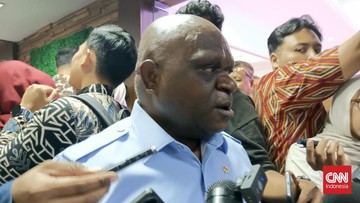
Human Rights Minister: Criticizing Government is a Right, Not a Crime
Translated from Indonesian, summarized and contextualized by DistantNews.
TLDR
- Indonesian Human Rights Minister Natalius Pigai stated that academics criticizing the government should not be reported to the police.
- Pigai argued that public criticism is a constitutional human right and should be met with facts and data, not legal action.
- He suggested a potential scenario where such reports aim to portray the current government as anti-criticism and anti-democracy, despite its stated commitment to human rights and democracy.
In a statement that has resonated across Indonesia, Human Rights Minister Natalius Pigai has firmly asserted that criticism directed at the government is a fundamental human right, not a criminal offense. His remarks come in response to a series of police reports filed against academics and observers who have voiced dissent regarding government policies. Pigai's stance is clear: opinions and critiques should be addressed with credible information and data by those in authority, rather than through legal channels that could stifle public discourse.
Opinions or public views should be answered with data, facts, and credible information by those with authority.
Minister Pigai went further, suggesting that the wave of police reports might be part of a deliberate strategy to undermine the government's image. He posited that these actions could be orchestrated to paint the administration, led by Prabowo Subianto and Gibran Rakabuming Raka, as authoritarian and intolerant of opposing views. This, he argued, is contrary to the government's foundational principles, which he insists are rooted in human rights and democratic values. Pigai emphasized that Indonesia is currently in a phase of maturing democracy, and resorting to police reports for criticism sends the wrong message.
There seems to be a scenario, these reports against fellow citizens are to corner or downgrade the Prabowo government as if it is anti-criticism, anti-democracy.
From the perspective of CNN Indonesia, Pigai's intervention is significant. It highlights a crucial tension within Indonesian society: the space for public criticism versus the government's response to it. While the government, as Pigai points out, claims to uphold democratic principles, the actions of filing police reports against critics raise questions about the practical application of these ideals. Pigai's call for a healthy public discourse, where ideas are debated with facts rather than legal threats, is a vital reminder of the ongoing evolution of Indonesia's democracy. His assertion that the government should be seen as a 'rights holder' obligated to respond to 'rights holders' in the public is a powerful framing that underscores accountability.
Criticism should be seen as a form of social control over government performance.
DistantNews Editorial
Originally published by CNN Indonesia in Indonesian. Translated, summarized, and contextualized by our editorial team with added local perspective. Read our editorial standards.
More Stories


From Our Blog

What Gets Lost (and Found) When News Is Translated

The Critical Role of Diaspora Media in Global News

What Travellers Should Know About Countries with Restricted Press

A Digital Nomad's Guide to Following Local News

How the Same Story Looks Different in Different Countries
