

Hungarian engineer questions wind power push, citing weak winds and high costs
Translated from Hungarian, summarized and contextualized by DistantNews.
At a glance
Analysis
Sources not specified
Context piece
- A Hungarian engineer questions the economic viability of accelerating wind power development in Hungary.
- He argues that Hungary's wind conditions are significantly weaker than in Western Europe, potentially impacting investment returns.
- The expert also raises concerns about system management costs and the end-of-life disposal of wind turbines.
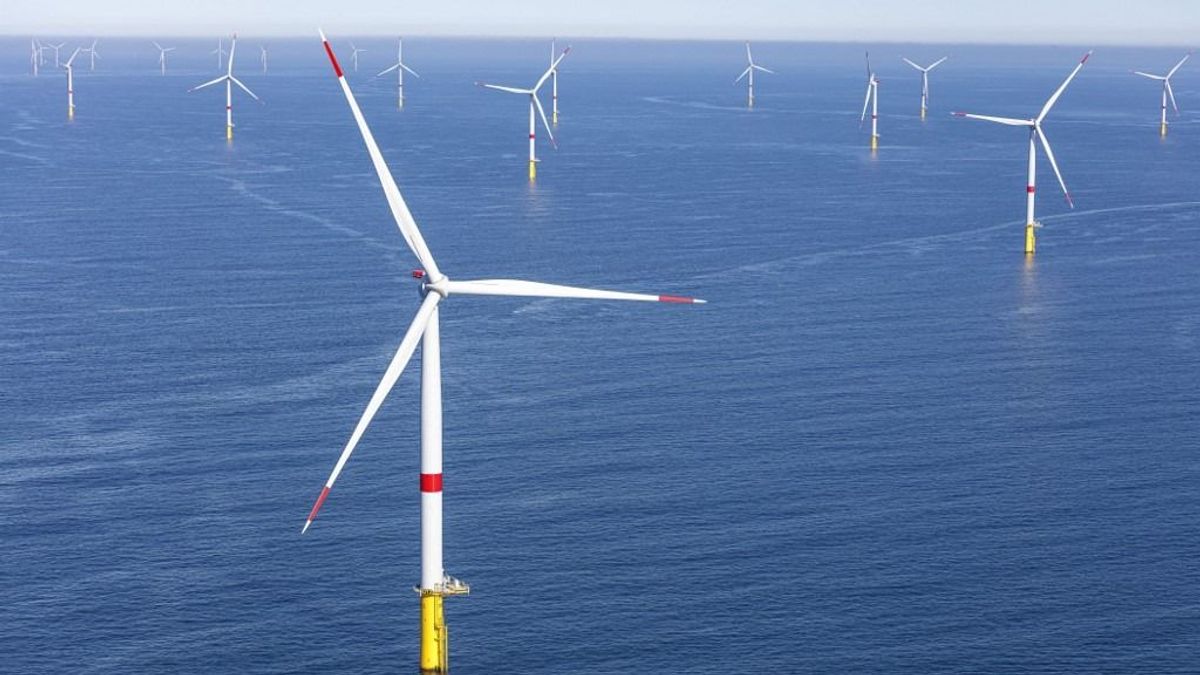
A Hungarian engineer is urging caution regarding the push to accelerate wind power development in Hungary, citing concerns about economic feasibility and environmental impact. Oelberg Gusztáv, an engineer and university lecturer, argues that while EU and domestic funds may support new wind farms, a thorough assessment of local wind conditions, system management costs, and turbine disposal is crucial.
The cost of investment in Hungary is roughly the same as in Denmark or the Netherlands, yet less energy can be produced with weaker wind conditions.
"The cost of investment in Hungary is roughly the same as in Denmark or the Netherlands, yet less energy can be produced with weaker wind conditions," Gusztáv stated. He noted that maps show the best Hungarian sites offering only 500–1200 full load operating hours annually, compared to over 3000 hours in Western European coastal areas. This significant difference, he believes, "considerably worsens the return on investment."
This difference considerably worsens the return on investment.
While acknowledging advancements in turbine technology, Gusztáv remains skeptical of projections suggesting 2000–2400 full load hours with modern, taller turbines. He bases his analysis on decades of data from European meteorological institutes, which he says smooth out individual variations. "The technique has naturally evolved a lot, but the wind's strength is not created by the machine," he explained, deeming the higher hour expectations "overestimated."
The technique has naturally evolved a lot, but the wind's strength is not created by the machine.
He also expressed concern that if actual production falls short of business plan projections, state guarantees might be invoked. Gusztáv finds it "unacceptable" for the state to guarantee private company profits, recalling similar situations from past electricity privatizations. He suggests comparing Hungary not with the North Sea, but with neighboring countries like Austria, Czechia, Slovakia, Romania, or Croatia, where wind farms are more common, while still emphasizing the need to consider geographical advantages like coastal winds.
I find the 2000–2400 hour expectation to be overestimated.
DistantNews Editorial
Originally published by Magyar Nemzet in Hungarian. Translated, summarized, and contextualized by our editorial team with added local perspective. Read our editorial standards.
More Stories
From Our Blog

Countries Without a Free Press: What You Need to Know

What Press Freedom Means for the News You Read

What Gets Lost (and Found) When News Is Translated

The Critical Role of Diaspora Media in Global News

What Travellers Should Know About Countries with Restricted Press
