

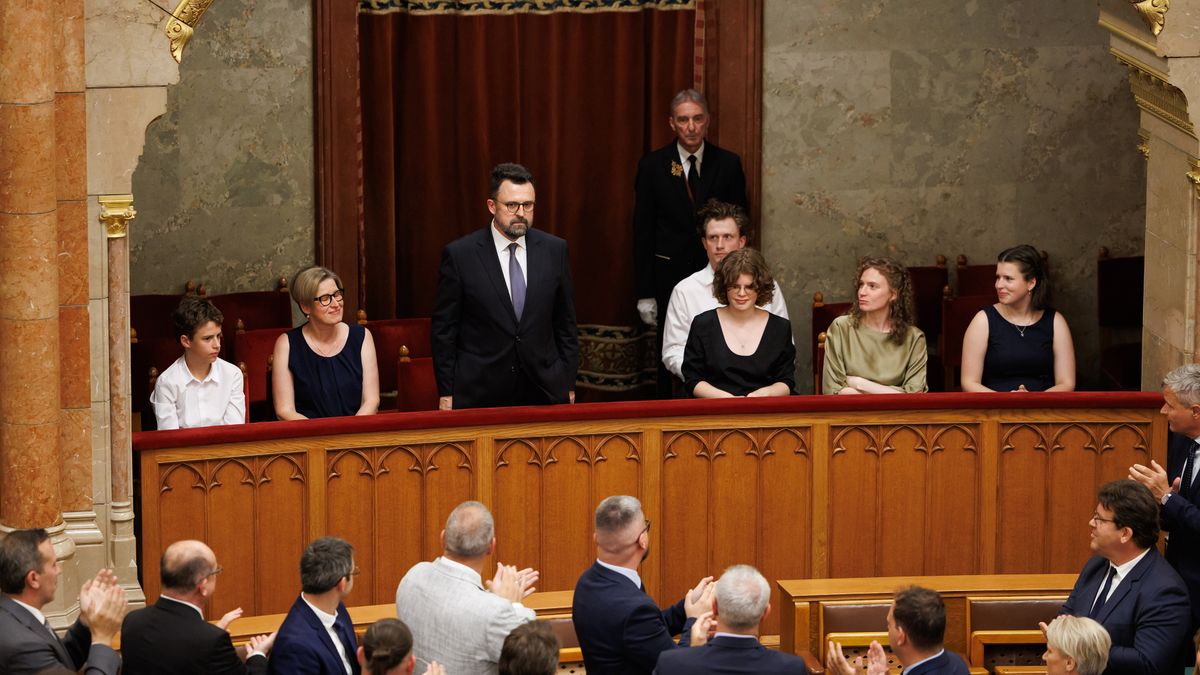

Hungarian MEP Criticized for Praising Withheld EU Funds
Translated from Hungarian, summarized and contextualized by DistantNews.
At a glance
News
Sources not specified
Context piece
- A Hungarian Member of the European Parliament, Kinga Kollár, is facing criticism for her past statements celebrating the withholding of EU funds from Hungary.
- Kollár had described the suspension of approximately 21 billion euros in EU funds as
Hungarian Member of the European Parliament Kinga Kollár faces public backlash for her past remarks where she praised the effectiveness of withheld EU funds in impacting Hungary's public services and economy.
As a Hungarian, I must say that [the rule of law procedure] has proven very effective, because approximately 21 billion euros have been suspended, and one billion has already been lost to Hungarians.
Kollár, a representative of the Tisza party, had previously stated in a European Parliament committee meeting that the suspension of EU funds was "very effective." She noted that the withholding of approximately 21 billion euros, with one billion already lost to Hungary, had severe consequences. She explained that the state could not invest in public services, support the economy, or provide extra social services. As an example, she pointed out that 50 hospital renovations planned under the RRF program did not materialize.
And this has had a very serious impact on the Hungarian state, as it cannot invest in public services. Of course, it cannot support the Hungarian economy, and it cannot provide extra social services to people.
"We can safely say that the conditionality procedure is very effective, it very effectively influences the daily lives of Hungarians," Kollár had stated. Her comments, particularly her apparent satisfaction with the negative impact on Hungary, have drawn sharp criticism from the public, who feel she betrayed national interests.
For example, 50 hospital renovations could have been carried out from the RRF program, and nothing happened.
DistantNews Editorial
Originally published by Magyar Nemzet in Hungarian. Translated, summarized, and contextualized by our editorial team with added local perspective. Read our editorial standards.
More Stories

From Our Blog

Countries Without a Free Press: What You Need to Know

What Press Freedom Means for the News You Read

What Gets Lost (and Found) When News Is Translated

The Critical Role of Diaspora Media in Global News

What Travellers Should Know About Countries with Restricted Press
