


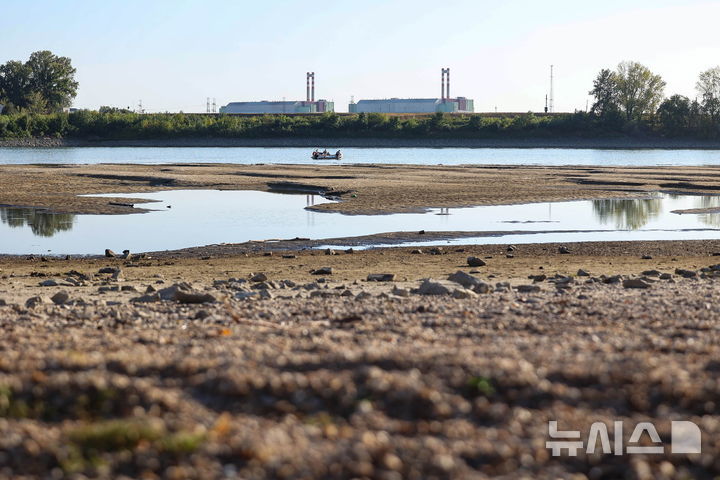
Hungary Halts Sole Nuclear Plant Amid Record Drought, Deepening Energy Crisis
Translated from Korean, summarized and contextualized by DistantNews.
At a glance
News
Named sources
Ongoing story
- Hungary has halted operations at its sole nuclear power plant, Paks, for the first time in 44 years due to critically low water levels in the Danube River caused by drought and heatwaves.
- The Paks plant, responsible for up to 40% of Hungary's electricity, requires Danube water for cooling, and current levels are at a record low.
- The shutdown exacerbates Hungary's energy crisis, impacting electricity supply and potentially worsening economic difficulties, with similar issues affecting other European countries reliant on the Danube.
Hungary has taken the unprecedented step of completely halting operations at its sole nuclear power plant, Paks, for the first time in its 44-year history. The decision, announced by Prime Minister Gergely Gulyás, stems from critically low water levels in the Danube River, the plant's essential cooling source, exacerbated by prolonged drought and heatwaves.
We are facing the most important five days.
The Paks plant, a 2-gigawatt facility located south of Budapest, supplies up to 40% of Hungary's electricity. Its reliance on the Danube means the current record-low water levels, measured at 23 cm, significantly below the previous 2018 low of 33 cm, render it unable to operate safely. The shutdown is expected to last several weeks, intensifying the nation's energy crisis.
Authorities are urging large industrial consumers to voluntarily reduce their electricity consumption, with the possibility of temporary supply cuts for non-compliant businesses. Additional energy-saving measures include suspending freight train operations during peak hours, reducing train speeds, and dimming decorative lights on public buildings. Citizens are also asked to limit air conditioner use and electric vehicle charging during evening peak times.
Starting tomorrow, the Paks nuclear power plant will cease operations.
The situation poses significant economic challenges for Hungary, with potential production halts in industries, reduced agricultural yields, and increased inflation driven by costly electricity imports. This crisis is not isolated to Hungary; Romania's Cernavodă nuclear plant, also using Danube water, faces similar operational risks. Serbia's hydropower output has decreased, and Germany's Rhine River, another vital trade route, has seen its lowest levels in eight years, impacting manufacturing.
The electricity system, public facilities, and all of us can experience enormous strain.
DistantNews Editorial
Originally published by Dong-A Ilbo in Korean. Translated, summarized, and contextualized by our editorial team with added local perspective. Read our editorial standards.
More Stories



From Our Blog

What Gets Lost (and Found) When News Is Translated

The Critical Role of Diaspora Media in Global News

What Travellers Should Know About Countries with Restricted Press

A Digital Nomad's Guide to Following Local News

How the Same Story Looks Different in Different Countries
