


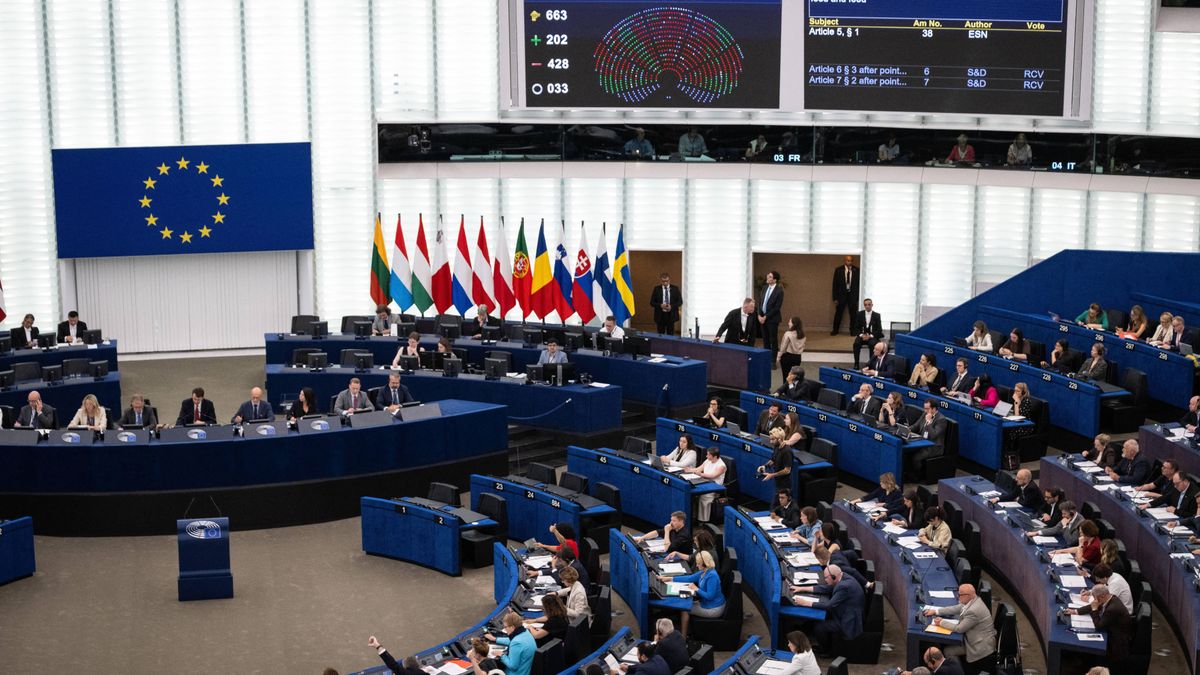
Hungary's Constitutional Changes Decried as 'Unconstitutional Coup' and Authoritarian Power Grab
Translated from Hungarian, summarized and contextualized by DistantNews.
At a glance
Opinion
Sources not specified
Context piece
- The article criticizes recent constitutional changes in Hungary, particularly the 12-year term limit for parliamentary mandates, as an "unconstitutional coup."
- It argues these changes effectively remove significant political figures and stifle political competition, thereby undermining democracy.
- The author condemns the silence of EU institutions regarding these developments, contrasting it with their past criticism of Hungary.
Recent constitutional amendments in Hungary, including a 12-year limit on parliamentary mandates, are being decried as an "unconstitutional coup" and a move toward an "authoritarian system." The author argues that these changes are designed to eliminate established political figures from public life, effectively ending political competition and, consequently, democracy in Hungary.
The 12-year term limit, if applied in the European Parliament, would prevent numerous current representatives from seeking re-election, including prominent figures like Manfred Weber and Daniel Freund. In Germany alone, nearly 60% of CDU representatives would be ineligible, and leaders such as the Italian Prime Minister, German Chancellor, Spanish Prime Minister, and Donald Tusk would also be barred.
With this complicit silence, Brussels has lost all credibility on rule-of-law issues once and for all.
The article asserts that these measures, combined with severe restrictions on suffrage, have eradicated political competition in Hungary. Where free political competition ceases, democracy cannot exist, the author contends. The author views these actions as a grave violation of the fundamental law, creating an illegitimate system aimed at consolidating power exclusively.
And where there is no free political competition, there is no democracy either.
Furthermore, the article criticizes the "deafening silence" of European Union institutions in response to these developments. It contrasts the current inaction with the EU's historical engagement, where Brussels frequently criticized "patriotic Hungary" and the European Parliament debated Hungary's affairs almost weekly. The author points to the European Commission's past withholding of EU funds, citing rule-of-law concerns, as a tool to pressure member states that diverge from the EU's political mainstream.
Now, as the author sees it, the "dismantling of the democratic rule of law" is occurring in Hungary, yet these same institutions remain silent. This silence, the article concludes, demonstrates that the rule-of-law procedure is merely a political tool for blackmailing member states that defend their sovereignty against the prevailing liberal-globalist elite in Brussels. This complicity, the author argues, has irrevocably destroyed Brussels' credibility on rule-of-law matters.
The goal is the same everywhere: to make sovereignist, patriotic, and nationally committed politicians and parties impossible through show trials and political retaliation.
DistantNews Editorial
Originally published by Magyar Nemzet in Hungarian. Translated, summarized, and contextualized by our editorial team with added local perspective. Read our editorial standards.
More Stories


From Our Blog

Countries Without a Free Press: What You Need to Know

What Press Freedom Means for the News You Read

What Gets Lost (and Found) When News Is Translated

The Critical Role of Diaspora Media in Global News

What Travellers Should Know About Countries with Restricted Press
