


Hungary's Danube River level rises, allowing partial restart of Paks nuclear plant
Translated from Romanian, summarized and contextualized by DistantNews.
At a glance
News
Sources not specified
Context piece
- Hungary's Prime Minister Péter Magyar announced the Danube River's water level rose 19 cm from last week's low, allowing partial resumption of operations at the Paks nuclear power plant.
- The increased water level is crucial for the plant's cooling systems, enabling the restart of a turbine and the production of energy.
- The situation also provides relief for nuclear plants in Hungary and Romania, which had been affected by critically low river flows in recent weeks.
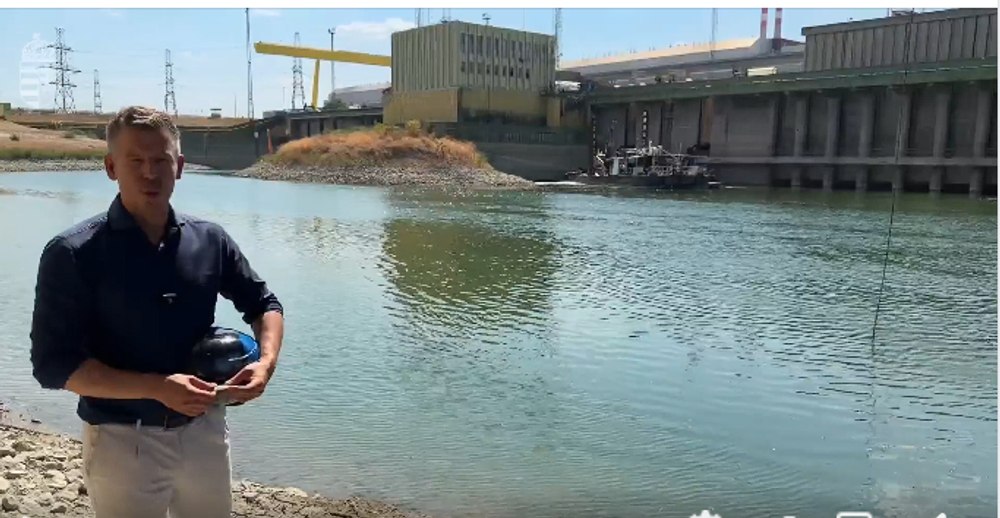
Hungary's Prime Minister Péter Magyar announced on Monday that the Danube River's water level has risen 19 centimeters above the previous week's low. This increase allows for the partial resumption of operations at the Paks nuclear power plant, a critical energy source for the nation.
Magyar stated on Facebook that the water level rise enabled the restart of a turbine at Paks, with a second unit's turbine number 3 set to produce energy by Monday evening. This development offers a much-needed reprieve for Hungary's nuclear facilities, which, along with Romania's, have faced production challenges due to critically low river flows in recent weeks.
The Danube water level was this morning 19 centimeters above the minimum level recorded a week ago. The process of restarting a turbine at Paks has begun. Starting tonight, turbine no. 3 of the second unit will also produce energy.
The Paks plant relies heavily on the Danube for its cooling systems. Extremely low water levels had previously hampered operations and reduced output, raising concerns about a potential energy crisis, as Magyar had warned earlier in August. The recent rise in water levels has allowed the plant to maintain production and begin reintegrating additional capacity.
Meanwhile, in Romania, the Danube's flow remains a concern for the national energy system. Cristian Bușoi, State Secretary at the Ministry of Energy, noted that the recent increase is insufficient to eliminate risks. Authorities are preparing for a crisis scenario that could involve limiting consumption for major industrial users, as the current water levels may only offer a limited and temporary effect.
It's not enough how much the Danube's flow has risen. It might have a limited effect, it won't last very long.
DistantNews Editorial
Originally published by Adevărul in Romanian. Translated, summarized, and contextualized by our editorial team with added local perspective. Read our editorial standards.
More Stories



From Our Blog

What Gets Lost (and Found) When News Is Translated

The Critical Role of Diaspora Media in Global News

What Travellers Should Know About Countries with Restricted Press

A Digital Nomad's Guide to Following Local News

How the Same Story Looks Different in Different Countries
