


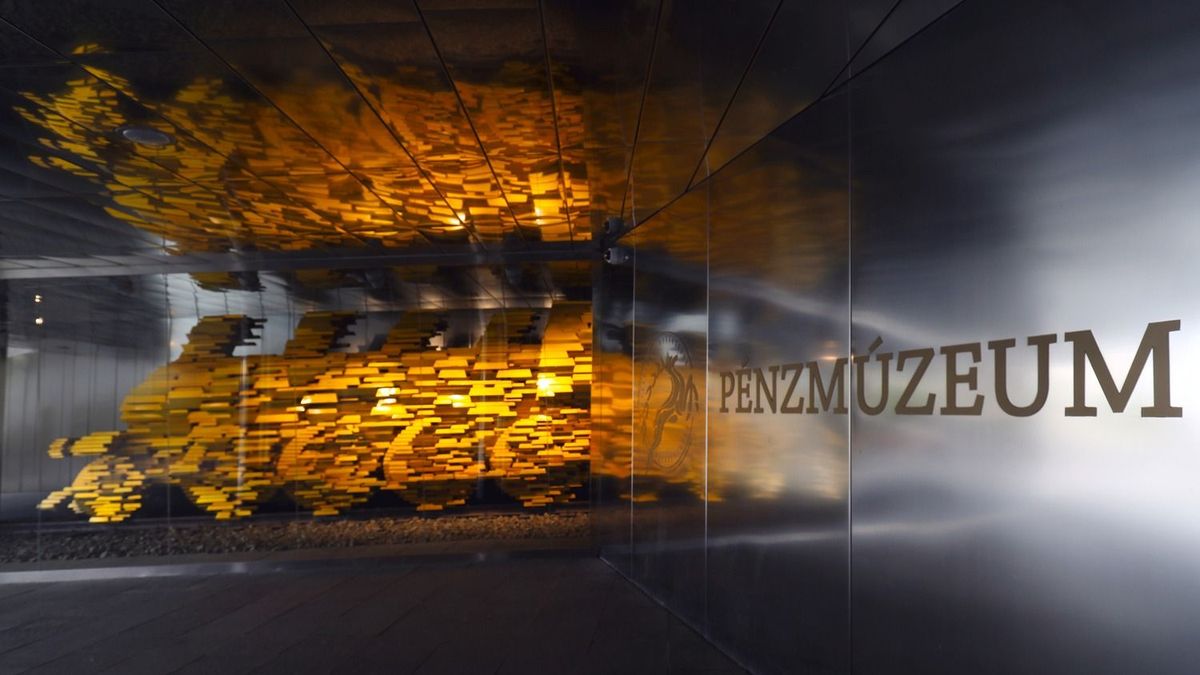
Hungary's daring gold reserve rescue operation marked 80 years ago
Translated from Hungarian, summarized and contextualized by DistantNews.
At a glance
News
Sources not specified
Outcome reported
- Eighty years ago, Hungary's gold reserves were returned to the country during the final months of World War II.
- The daring operation to save the national treasure involved Hungarian National Bank employees risking their lives.
- A new exhibition at the Museum of Money showcases this perilous undertaking, highlighting the staff's resilience and patriotism.
Eighty years ago, in the final months of World War II, Hungary's gold reserves were returned to the nation. This daring operation to secure the country's wealth involved Hungarian National Bank employees risking their lives. Their actions serve as an example of resilience and patriotism.
The story of saving the gold reserves is filled with suspenseful scenes. Bank employees, along with their families, were stranded for weeks in train cars near Fertőboz, close to the Austrian border, even spending Christmas 1944 there. Conditions were harsh, with temperatures dropping to minus 10-20 degrees Celsius in winter, insufficient heating, and limited food supplies. The constant threat of bombings and German pressure added to the uncertainty.
These individuals guarded the nation's financial assets while fearing for their lives. They resorted to eating leftover apples found in fields, and children often slept on top of the chests containing the gold. Families huddled together in cramped train cars, exposed to the cold and deprivation.
The German forces repeatedly attempted to seize control of the shipment, proposing to redirect the gold, artworks, and silver to various locations in Germany or Austria. This would have fragmented Hungary's assets, making their recovery nearly impossible. However, the Hungarian National Bank leadership and staff remained steadfast, insisting that the assets would stay under Hungarian ownership and that the personnel would move with them.
In January 1945, the train finally reached Spital am Pyhrn in Upper Austria. The gold was then moved to the crypt of a Benedictine monastery in the alpine town.
DistantNews Editorial
Originally published by Magyar Nemzet in Hungarian. Translated, summarized, and contextualized by our editorial team with added local perspective. Read our editorial standards.
More Stories

From Our Blog

Countries Without a Free Press: What You Need to Know

What Press Freedom Means for the News You Read

What Gets Lost (and Found) When News Is Translated

The Critical Role of Diaspora Media in Global News

What Travellers Should Know About Countries with Restricted Press
