


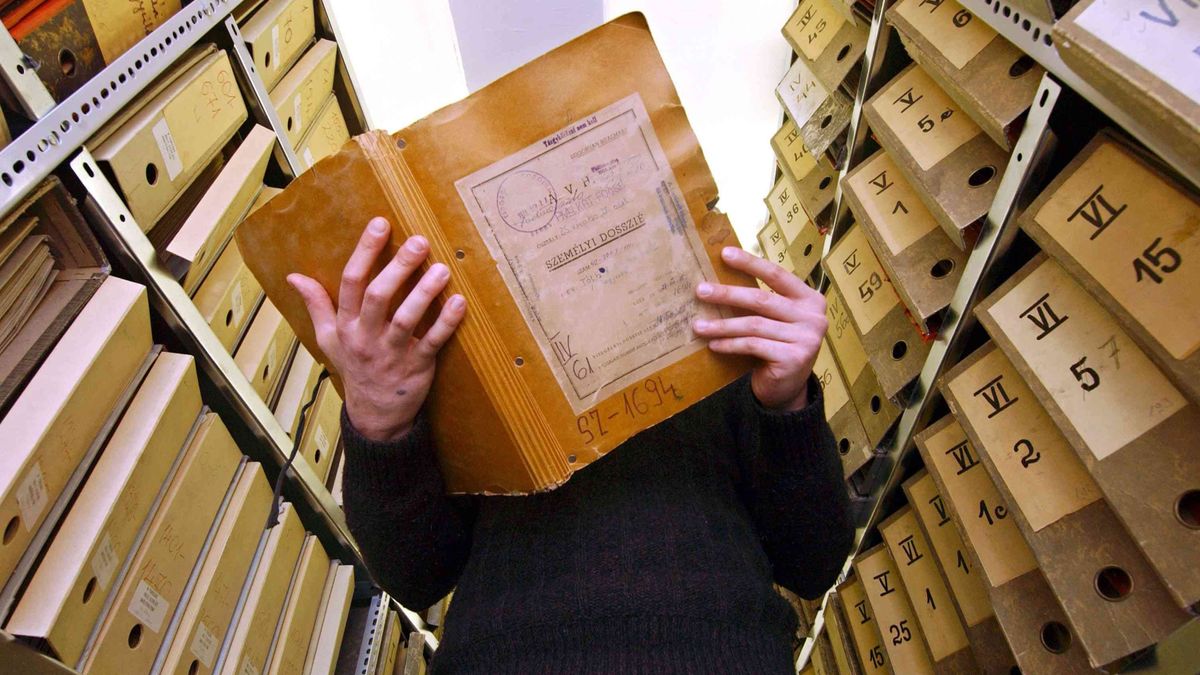
Hungary submits bill to publicize state security files
Translated from Hungarian, summarized and contextualized by DistantNews.
At a glance
News
Official statement
New plan
- Hungary's government submitted a bill to publicize historical state security files, starting with "hatos kartonok" and magnetic tapes.
- These files contain information on recruited agents and operational records from the communist era.
- The legislation aims to balance historical truth, research freedom, and national security interests.
Hungary's government has introduced legislation to open up historical state security archives, a move that will gradually make previously secret files accessible to the public. The initial phase will focus on releasing the contents of "hatos kartonok" (sixth-category index cards) and notorious magnetic tapes, with the goal of making this information available before the 70th anniversary of the 1956 revolution.
The "hatos kartonok" are reported to contain data related to the recruitment of network personnel, while the magnetic tapes hold records copied in January 1990. These include operational registers, network registers, and central counter-intelligence archives, which were transferred to the tapes in a disorganized manner. Following this initial release, the government plans to publish remaining files from "B-dossziék" (B-files) by the end of the year. These files detail individuals who were involved with or recruited by state security networks, including their recruitment files and evaluations, and identify the sources from whom information was gathered.
The stated objective of the bill is to foster an understanding of the past, achieve historical justice, and facilitate research. The government emphasizes that accessing lists of individuals who cooperated with or were connected to state security before the regime change will contribute to comprehending and processing both the past and the present. The proposed law seeks to strike a balance between the public interest in knowing the past, the freedom of research, the right to informational self-determination, and the protection of ongoing national security interests.
DistantNews Editorial
Originally published by Magyar Nemzet in Hungarian. Translated, summarized, and contextualized by our editorial team with added local perspective. Read our editorial standards.
More Stories



From Our Blog

Countries Without a Free Press: What You Need to Know

What Press Freedom Means for the News You Read

What Gets Lost (and Found) When News Is Translated

The Critical Role of Diaspora Media in Global News

What Travellers Should Know About Countries with Restricted Press
