


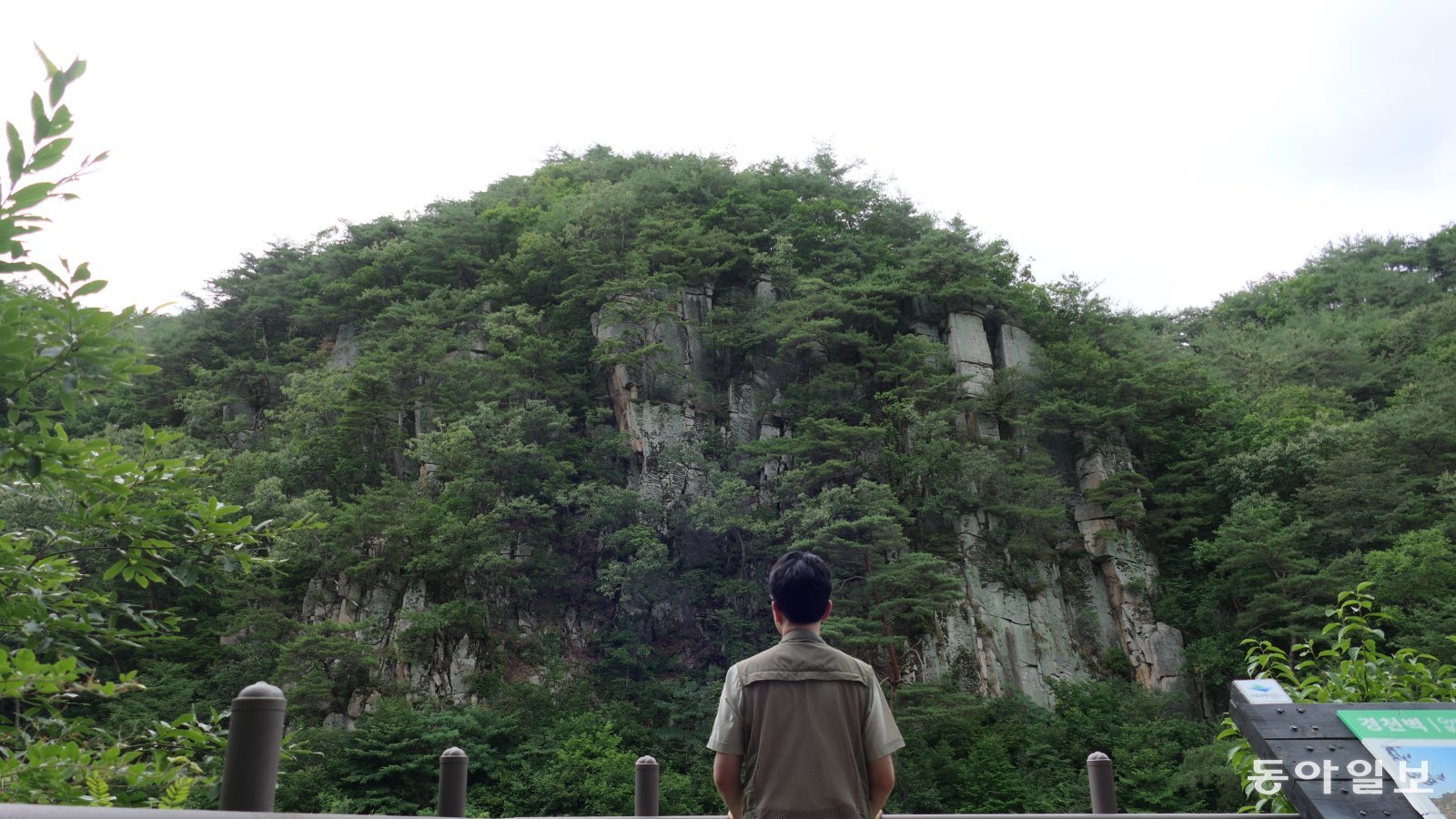
Hwayanggok: Valley of Nine Bends, Echoes of Loyalty and Confucianism
Translated from Korean, summarized and contextualized by DistantNews.
At a glance
In-depth
Sources not specified
Context piece
- Hwayanggok is a nine-bend valley in Songnisan National Park, known for its scenic beauty and historical significance.
- The area was a retreat for Confucian scholar Song Si-yeol during his later years.
- The valley's nine scenic spots were named by his disciples, reflecting both natural beauty and historical events.
- Inscriptions on rocks, like 'Manjeolbidong' (All bends flow east) and 'Bilyebudong' (Do not move if it is not right), add layers of meaning related to loyalty and Confucian principles.
Hwayanggok, a nine-bend valley nestled within Songnisan National Park in Goesan, Chungbuk Province, offers a journey through nine distinct scenic spots, each a testament to natural splendor and historical resonance. This picturesque landscape served as a retreat for the prominent Joseon Dynasty scholar Song Si-yeol in his twilight years, a place he found ideal for cultivating the Confucian virtue of 'ye' (propriety).
The towering appearance is as if carved by ghosts.
The valley's nine locations, inspired by China's Wuyi Mountains, were meticulously named by Song Si-yeol's disciples. Among these sites is Gyeongcheonbyeok, a cliff described in historical records as 'looking like it supports the sky,' and Unyeongdam, a tranquil spot named for the reflection of sky and clouds on its calm waters. Another significant location is Eupgungam, where Song Si-yeol would mourn the anniversary of King Hyojong's death, a ritual tied to historical events and the scholar's deep sense of loyalty.
The sky's light and cloud's shadow.
Further along the valley, visitors encounter Geumsadam, known for its golden sands shimmering under sunlight, and Amseojjae, Song Si-yeol's simple study overlooking the water. Here, inscriptions like 'Chang-o-un-dan Mu-i-san-kong' (Changbai Mountains' clouds have scattered, Wuyi Mountains are empty) hint at Song Si-yeol's sorrow over the fall of the Ming Dynasty and his desire to preserve Confucian culture in Joseon. This sentiment is also reflected in 'Manjeolbidong' (All bends flow east), an imperial calligraphy by King Seonjo, signifying unwavering loyalty to the Chinese emperor.
All bends flow east.
Adding another layer of philosophical depth is the inscription 'Bilyebudong' (Do not move if it is not right), a phrase from Emperor Yizong of Ming, which Song Si-yeol deeply cherished. The valley also features Mandongmyo, a shrine honoring Ming emperors, reflecting Song Si-yeol's strong belief in righteousness and loyalty, though some interpret this as excessive subservience to China. The Hwayanggok thus serves not only as a place of natural beauty but also as a historical canvas reflecting the complex political and philosophical currents of the Joseon era.
Do not move if it is not right.
DistantNews Editorial
Originally published by Dong-A Ilbo in Korean. Translated, summarized, and contextualized by our editorial team with added local perspective. Read our editorial standards.
More Stories


From Our Blog

What Gets Lost (and Found) When News Is Translated

The Critical Role of Diaspora Media in Global News

What Travellers Should Know About Countries with Restricted Press

A Digital Nomad's Guide to Following Local News

How the Same Story Looks Different in Different Countries
