


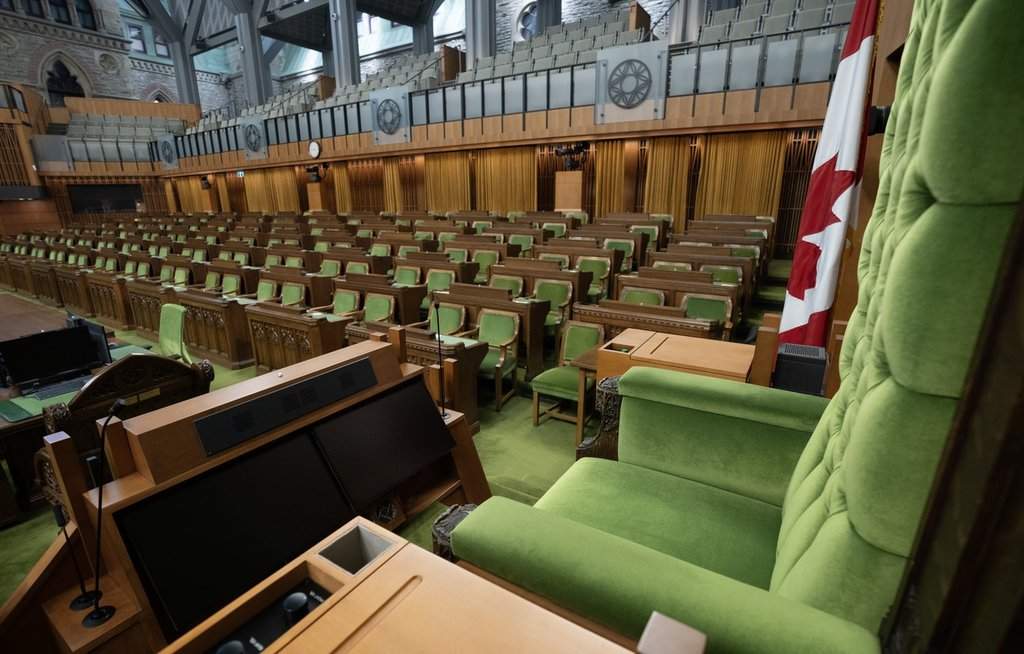
Hybrid work in Parliament? MPs split on post-pandemic structure
Summarized and contextualized by DistantNews.
At a glance
News
Named sources
Context piece
- Canadian Members of Parliament (MPs) are divided on whether to continue hybrid work rules, which allow voting and committee meetings from home.
- While many private and public sector employees are returning to offices full-time, MPs continue to debate the benefits of remote work flexibility.
- Unions representing federal public sector workers argue that denying employees the flexibility enjoyed by MPs is contradictory.
Canada's Parliament is grappling with a significant division among Members of Parliament (MPs) regarding the continuation of hybrid work rules, a system that emerged during the pandemic and allows for virtual voting and committee meetings. While many private and public sector employees are being called back to their offices, the debate over maintaining this flexibility for lawmakers remains contentious.
Parliamentarians have clearly seen the benefits of remote work with the way technology assists in connecting with colleagues and the savings it generates for Canadian taxpayers.
Since March 2020, when hybrid rules were first adopted for committees, and later for full sittings of the House of Commons, MPs have become accustomed to casting votes remotely, sometimes even during social engagements. This shift has mirrored trends in the private and public sectors, where companies like RBC and Bank of Montreal, along with federal public servants, are increasingly required to work from the office more frequently.
We have been highlighting the advantages of remote work for several years and believe that all workers should have access to remote or hybrid work options where operational requirements allow and the work can be performed effectively.
This disparity has drawn criticism from public sector unions. Nathan Prier, president of the Canadian Association of Professional Employees, called it "contradictory" to deny public service workers the same work flexibility that Parliamentarians enjoy. He highlighted the technological advancements that facilitate remote collaboration and the potential cost savings for taxpayers.
the answer to an arbitrary return-to-office mandate is not necessarily another arbitrary mandate for Parliamentarians.
The Public Service Alliance of Canada echoed these sentiments, advocating for flexible work arrangements where operational requirements allow. They believe remote or hybrid options should be accessible to all workers. Similarly, the Professional Institute of the Public Service argued against arbitrary return-to-office mandates, stating that in-person attendance should be required only when it genuinely serves the work, not merely for visibility. The article notes that MPs themselves hold mixed opinions on the matter.
Whether someone is a scientist, an IT expert or a member of Parliament, in-person attendance should be required when it serves the work, not simply for the sake of visibility.
DistantNews Editorial
Originally published by Global News. Summarized and contextualized by our editorial team with added local perspective. Read our editorial standards.
More Stories



From Our Blog

What Gets Lost (and Found) When News Is Translated

The Critical Role of Diaspora Media in Global News

What Travellers Should Know About Countries with Restricted Press

A Digital Nomad's Guide to Following Local News

How the Same Story Looks Different in Different Countries
