


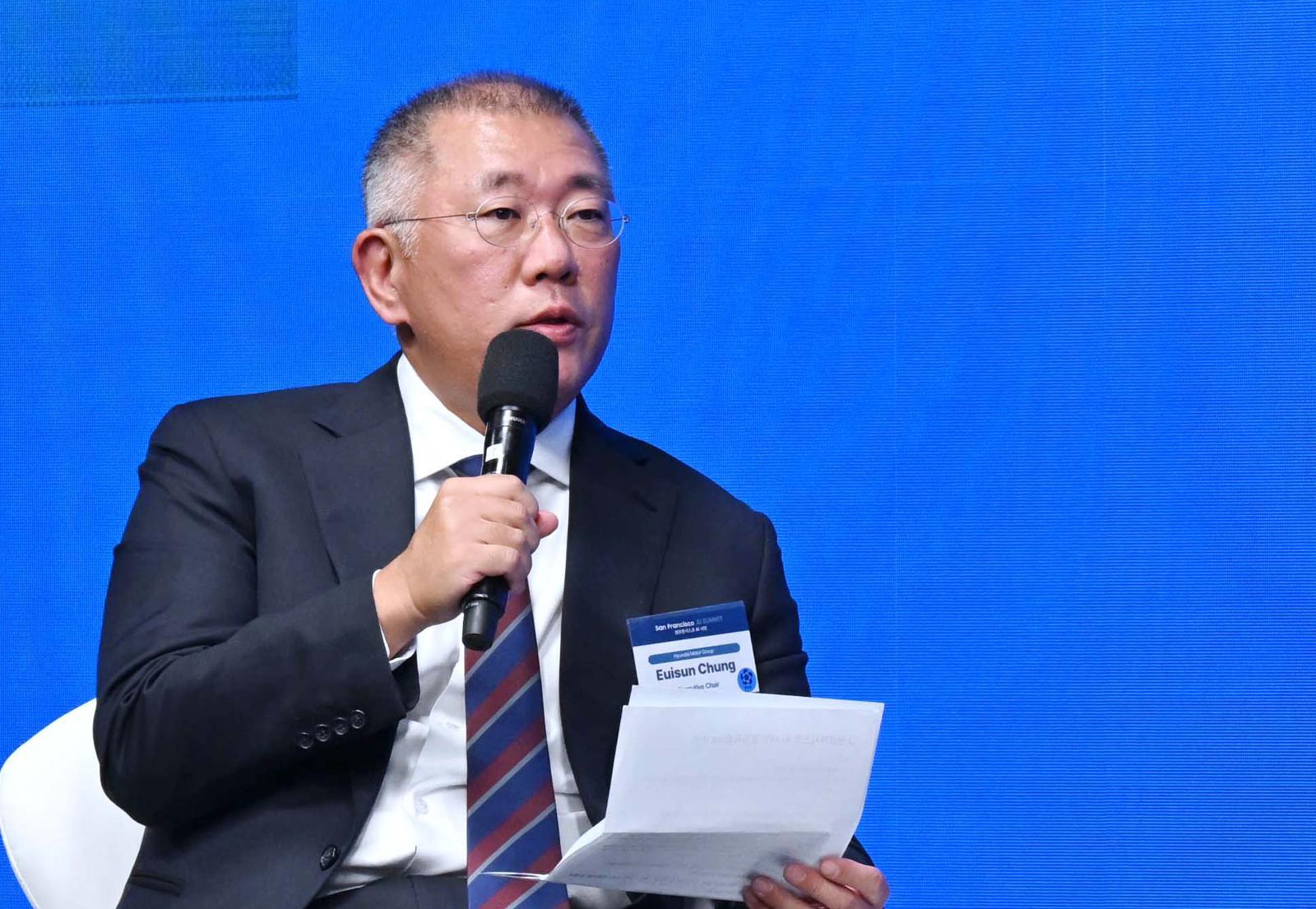
Hyundai Chairman: 'Long way to go' despite Brazil sales milestone
Translated from Korean, summarized and contextualized by DistantNews.
At a glance
News
Sources not specified
Context piece
- Hyundai Motor Group Chairman Euisun Chung expressed a desire for further market expansion in Brazil, despite the company surpassing 200,000 vehicle sales there for the third consecutive year.
- Chung acknowledged the increasing competition from Chinese automakers in the South American market.
- Hyundai has maintained its sales volume in Brazil by producing localized models like the HB20 and Creta at its Piracicaba plant.
Hyundai Motor Group Chairman Euisun Chung signaled a continued ambition for growth in the Brazilian market, stating that there is "still a long way to go" even as the company achieved over 200,000 vehicle sales in the country for the third year running. Chung made these remarks on Tuesday during a Korea-Brazil business roundtable event in Sao Paulo, held during President Yoon Suk Yeol's state visit.
Chung also voiced concerns about the growing presence of Chinese car manufacturers in South America, noting their aggressive market strategies. This competitive pressure adds a layer of complexity to Hyundai's expansion plans in the region.
There is still a long way to go.
According to the Brazilian Association of Automobile Distributors, Hyundai sold 203,579 vehicles in Brazil last year, marking the third consecutive year it has surpassed the 200,000-unit threshold. The company's success is partly attributed to its local production of popular models such as the HB20 compact hatchback and the Creta compact SUV at its Piracicaba plant. The HB20, in particular, has become a favorite among Brazilian consumers, partly due to its adoption of the FEV (Flexible-fuel Electric Vehicle) system, which allows it to run on a blend of ethanol and gasoline, a significant advantage in Brazil, the world's largest sugarcane producer.
Chinese cars are also aggressively entering the market these days.
DistantNews Editorial
Originally published by Dong-A Ilbo in Korean. Translated, summarized, and contextualized by our editorial team with added local perspective. Read our editorial standards.
More Stories

From Our Blog

What Gets Lost (and Found) When News Is Translated

The Critical Role of Diaspora Media in Global News

What Travellers Should Know About Countries with Restricted Press

A Digital Nomad's Guide to Following Local News

How the Same Story Looks Different in Different Countries
