

Hyundai Motor Union Stages Six-Hour Partial Strike, Citing Unmet Demands
Translated from Korean, summarized and contextualized by DistantNews.
At a glance
News
Named sources
Ongoing story
- Hyundai Motor labor union members are staging a six-hour partial strike on August 14, extending a series of work stoppages after their summer vacation.
- The strike will halt production lines for up to 12 hours daily, impacting operations for both shifts.
- The union is demanding a 149,600 won base pay increase, a 30% profit sharing bonus, an 800% increase in bonuses, extended retirement age, and rehiring of dismissed workers, while the company's latest offer was rejected.
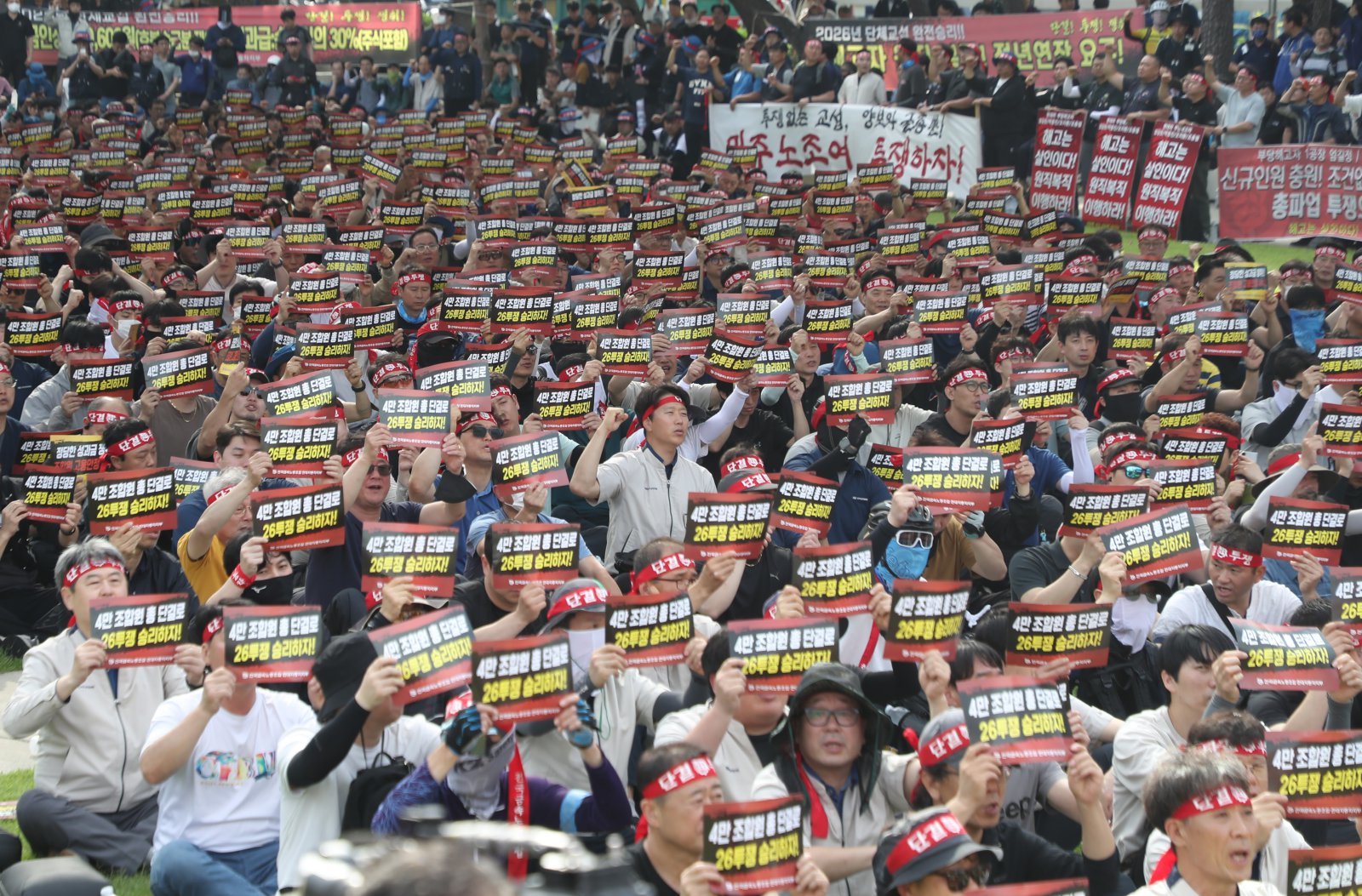
Hyundai Motor's labor union is escalating its industrial action with a six-hour partial strike for each shift on August 14. This marks the third consecutive day of partial strikes following the company's summer vacation period, with production lines potentially halted for up to 12 hours daily.
The union's action includes members from the first shift starting at 8:50 a.m. and the second shift beginning at 5:30 p.m., each striking for six hours. Regular day workers and those on the continuous day shift will strike from 10 a.m. The union has also announced plans for another six-hour strike on August 18, though they reserve the right to postpone it if negotiations resume.
Previous strikes and a refusal to work overtime in July resulted in an estimated production loss of over 42,000 vehicles, with financial losses projected to exceed 1 trillion won. The union's demands include a base pay increase of 149,600 won, a bonus equivalent to 30% of last year's net profit, an 800% bonus increase, an extended retirement age, and the reinstatement of dismissed workers.
Hyundai Motor's management offered a base pay raise of 89,000 won, a bonus of 350% plus 10 million won, and 15 company shares. However, the union rejected this offer, deeming it insufficient to meet members' expectations. Substantive negotiations have been stalled for over a month since the 15th round of talks on July 8.
DistantNews Editorial
Originally published by Dong-A Ilbo in Korean. Translated, summarized, and contextualized by our editorial team with added local perspective. Read our editorial standards.
More Stories


From Our Blog

What Gets Lost (and Found) When News Is Translated

The Critical Role of Diaspora Media in Global News

What Travellers Should Know About Countries with Restricted Press

A Digital Nomad's Guide to Following Local News

How the Same Story Looks Different in Different Countries
