


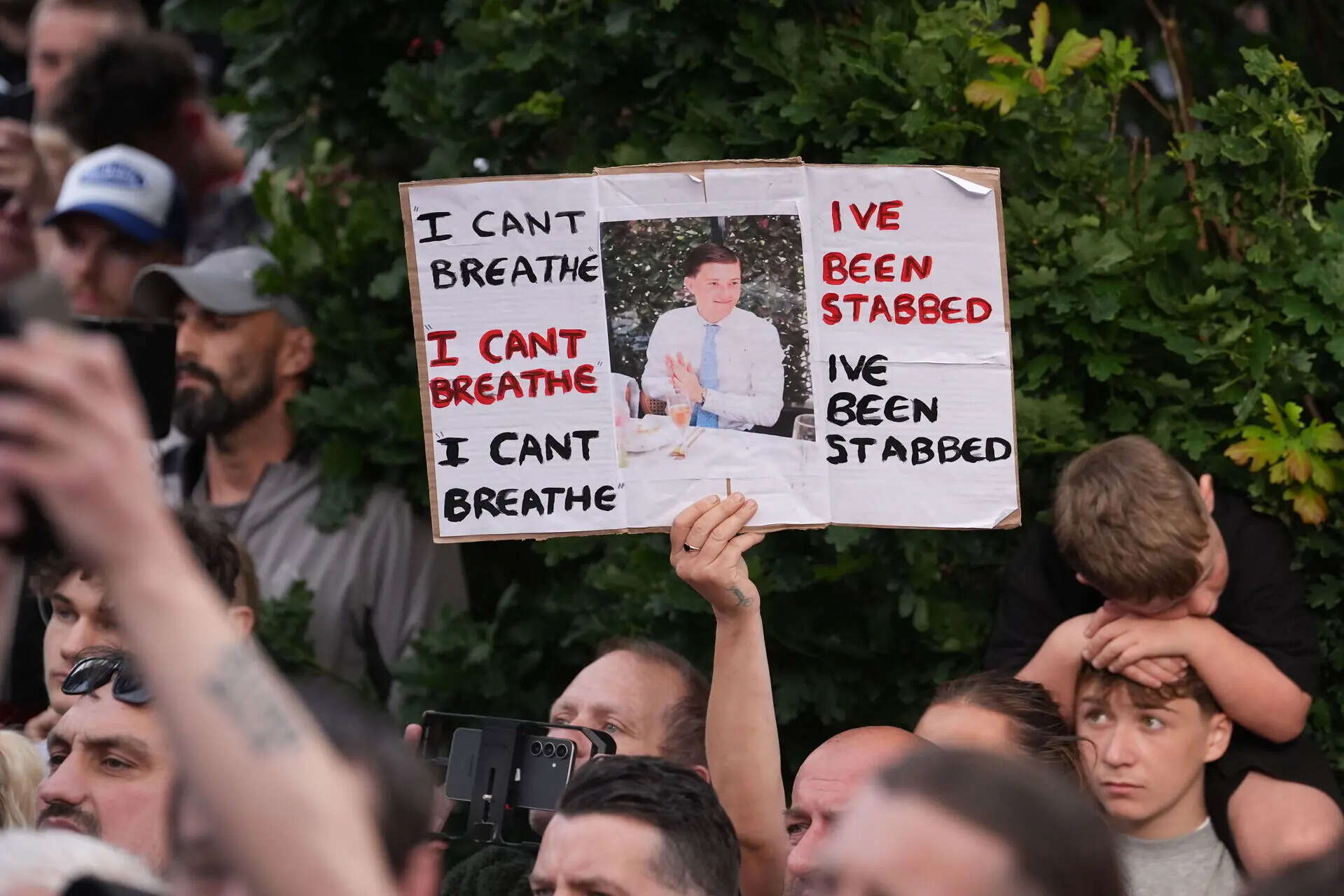
'I can’t breathe': Why Henry Nowak's fatal stabbing by a Sikh man could become British Right's 'Black Lives Matter'
Summarized and contextualized by DistantNews.
At a glance
Analysis
Sources not specified
Context piece
- The fatal stabbing of Henry Nowak by a Sikh man in Britain is being framed by some on the British Right as their equivalent of the 'Black Lives Matter' movement.
- The article critiques how such events are interpreted and shared on social media, likening viral memes to simplistic offerings.
- It suggests that the interpretation of events, including weather, is influenced by individual biases, political leanings, and beliefs.
The fatal stabbing of Henry Nowak by a Sikh man in Britain is being co-opted by elements of the British Right, who are attempting to frame it as their version of the 'Black Lives Matter' movement. This framing seeks to leverage the incident for a specific political narrative.
The article critiques the way such events are processed and disseminated online, particularly through social media. It likens viral memes and interpretations of these incidents to simplistic and derivative offerings, suggesting they lack depth and nuance. The author draws a parallel to the work of Yuval Harari, implying a reductionist approach to complex issues.
Ultimately, the piece argues that how an event, even something as mundane as rainfall, is reported and understood depends heavily on individual perspectives. Factors such as availability heuristic, political leanings, scientific understanding, and even theological beliefs shape the way people interpret and explain the world around them. This suggests the framing of Nowak's death is a product of these subjective filters rather than an objective reflection of the event itself.
Like most memes that go viral on social media, it’s derivative and reductive, like a Yuval Harari offering. Whether it’s raining, how one reports said rain, and how one explains why it’s raining depends upon one’s availability heuristic, political leanings, scientific understanding, and even theological beliefs, or lack thereof.
DistantNews Editorial
Originally published by Times of India. Summarized and contextualized by our editorial team with added local perspective. Read our editorial standards.
More Stories


From Our Blog

What Press Freedom Means for the News You Read

What Gets Lost (and Found) When News Is Translated

The Critical Role of Diaspora Media in Global News

What Travellers Should Know About Countries with Restricted Press

A Digital Nomad's Guide to Following Local News
