


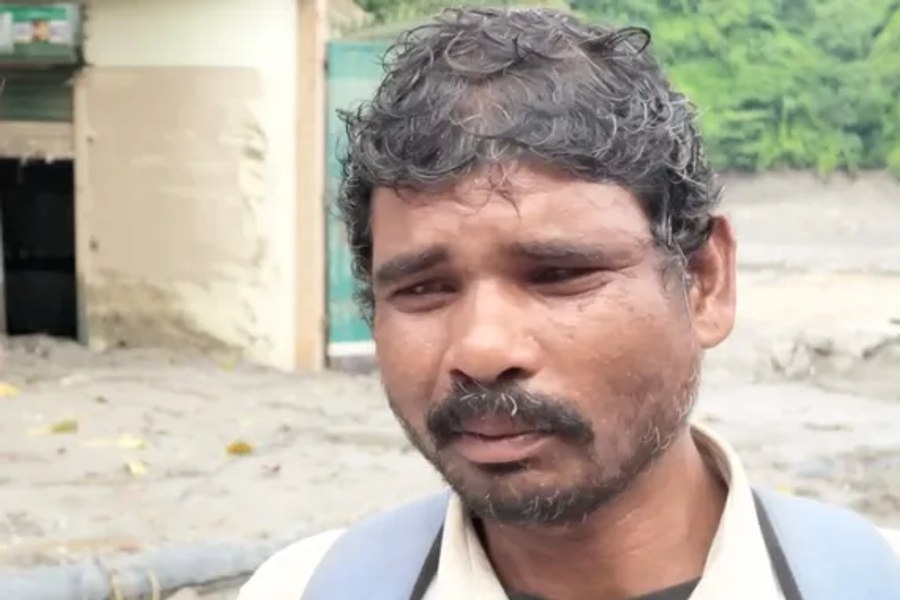
“I Have No Hope, But I Cannot Give Up”: Father Borrows $13 to Search for Son Missing in Nepal Floods
Translated from Romanian and summarized by DistantNews. Read the original for the full story.
At a glance
In-depth
Named sources
Ongoing story
- Talka Sada traveled from Nepal’s Saptari district to areas hit by floods in search of his 19-year-old son, Vinod, who disappeared while working at a hydropower plant.
- He borrowed 2,000 Nepali rupees at high interest to pay for the journey and checked hospitals, morgues and military camps for information.
- Destroyed roads, mud and unclear information have hindered the search, while Sada says poverty and his community’s marginalized status have made it harder to communicate with authorities.
Talka Sada borrowed 2,000 Nepali rupees, about $13, at high interest and traveled hundreds of kilometers to search for his missing son. “I have no hope, but I cannot give up,” he said.
I have no hope, but I cannot give up.
His 19-year-old son, Vinod, had worked for about a month at a hydropower plant in Rasuwa district, one of the areas hardest hit by the floods on Aug. 26. He performed casual jobs, including mixing cement. The last conversation between father and son took place the day before the floods. Vinod and four other workers, aged between 17 and 19, have not been found.
Sada said his wife has been crying constantly and that he is in deep pain without knowing what to do. He and his brother first traveled about nine hours by bus from Saptari to Kathmandu. There, Sada checked hospitals in the hope of finding Vinod among survivors or on lists of the dead. Some recovered bodies were difficult to identify because of the time spent in water and the conditions at the disaster sites.
I cannot tell you how much my wife cries. I am also in deep pain and do not know what to do.
With no information, the two continued to Nuwakot district, about 60 kilometers from Kathmandu and closer to the place where Vinod worked. Flood damage made the journey extremely difficult. Roads had been destroyed, while mud and debris covered parts of several settlements.
I borrowed money to come here from Saptari. I pay interest of 20 rupees for every 100 rupees borrowed.
In Trishuli, they paid 1,500 rupees for one night’s lodging. Sada said he might have no money left for the trip home if they had to stay another night. The pair sought help at morgues and military camps set up for disaster victims, but said officials sent them from place to place without clear information. Sada also said his marginalized community and limited fluency in Nepali had compounded the difficulty. “We are poor. They consider us Madhesi and Bihari. We cannot speak Nepali fluently, so we only receive...”
We are poor. They consider us Madhesi and Bihari. We cannot speak Nepali fluently, so we only receive...
About this summary
Originally published by Adevărul in Romanian. Translated, summarized, and contextualized automatically by DistantNews, with a note on how the source frames the story. Not individually reviewed before publishing. How this works.
More Stories


From Our Blog

What Gets Lost (and Found) When News Is Translated

The Critical Role of Diaspora Media in Global News

What Travellers Should Know About Countries with Restricted Press

A Digital Nomad's Guide to Following Local News

How the Same Story Looks Different in Different Countries
