


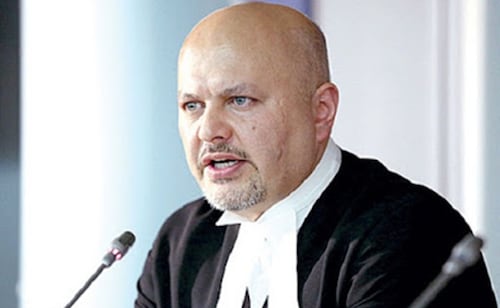
ICC Assembly meets to debate prosecutor Karim Khan's future amid misconduct allegations
Translated from Spanish, summarized and contextualized by DistantNews.
At a glance
News
Sources not specified
Ongoing story
- The International Criminal Court's Assembly of States Parties is holding an extraordinary session to decide on the potential dismissal of Prosecutor Karim Khan.
- Khan faces accusations of sexual misconduct, with the assembly needing an absolute majority of 63 votes to approve his removal.
- The Netherlands, the host country, has indicated it will vote to dismiss Khan, citing the need for a prosecutor of high moral integrity.
The International Criminal Court's Assembly of States Parties convened at the United Nations headquarters in an extraordinary session to deliberate the fate of Prosecutor Karim Khan. The 125-member body will decide whether to approve Khan's dismissal over alleged sexual misconduct, a move that would mark an unprecedented outcome for the tribunal.
The session commenced with a public plenary before moving to closed-door discussions. Assembly President Päivi Kaukoranta expressed a desire to handle the matter with respect for the privacy of the individual and the institution. Finland's diplomat also announced the appointment of Japan's Hiromi Okhara as rapporteur and a Credentials Verification Commission comprising Belize, Cyprus, France, Germany, Ghana, Senegal, Slovakia, Slovenia, and Ukraine.
The decision, expected later Friday, will be announced during the closing plenary. Key member states, including Spain, France, and Germany, are participating. The Netherlands, the court's host nation, has stated it will vote for Khan's dismissal, emphasizing that the prosecutor must embody high moral integrity. The United States, Israel, China, India, and Russia, not being State Parties to the Rome Statute, are not participating in the vote.
The meeting follows a recommendation from the Assembly's Bureau in June to dismiss Khan, who has been suspended pending the member states' decision. This recommendation stemmed from investigations into allegations made by a former collaborator who reported non-consensensual sexual contact between March 2023 and April 2024. A confidential summary of an independent panel's findings reportedly concluded unanimously that the evidence supported the allegations.
DistantNews Editorial
Originally published by El Universal in Spanish. Translated, summarized, and contextualized by our editorial team with added local perspective. Read our editorial standards.
More Stories

From Our Blog

What Press Freedom Means for the News You Read

What Gets Lost (and Found) When News Is Translated

The Critical Role of Diaspora Media in Global News

What Travellers Should Know About Countries with Restricted Press

A Digital Nomad's Guide to Following Local News
