


Ice avalanche, debris lake may have triggered Bhotekoshi flood
Summarized and contextualized by DistantNews.
At a glance
News
Named sources
Ongoing story
- Officials suspect an ice avalanche and a subsequent debris lake burst caused a sudden flood in Nepal's Bhotekoshi river.
- Satellite imagery showed debris blocking the river, forming a temporary lake that then burst, increasing the flood's destructive power.
- This event is similar to a 2025 flood, and while a glacial lake outburst is being considered, an ice avalanche is the preliminary assessed cause.
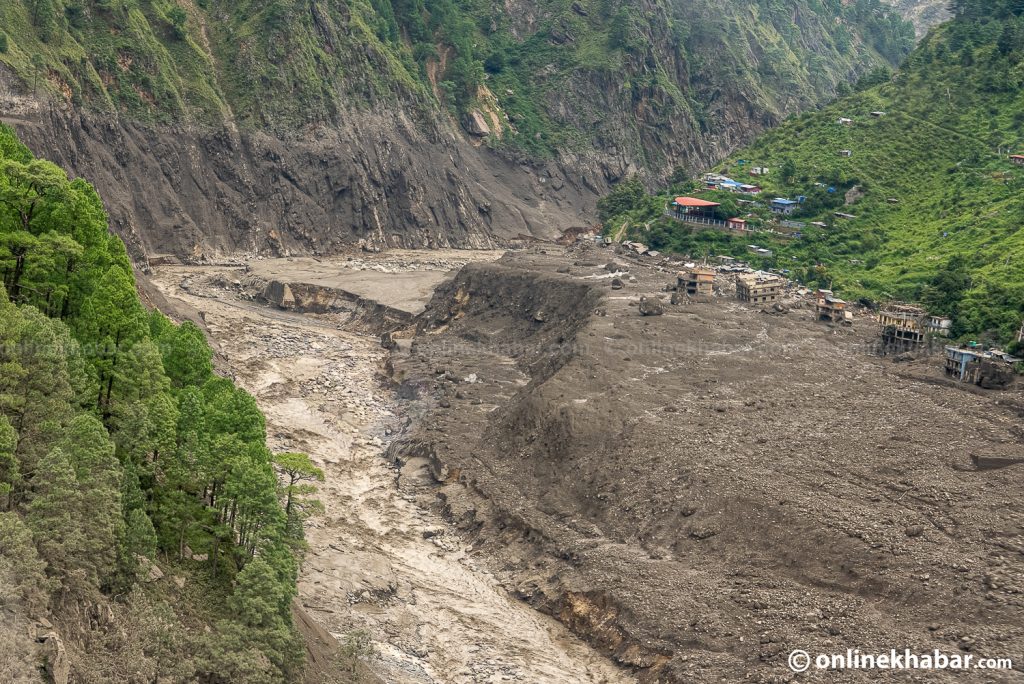
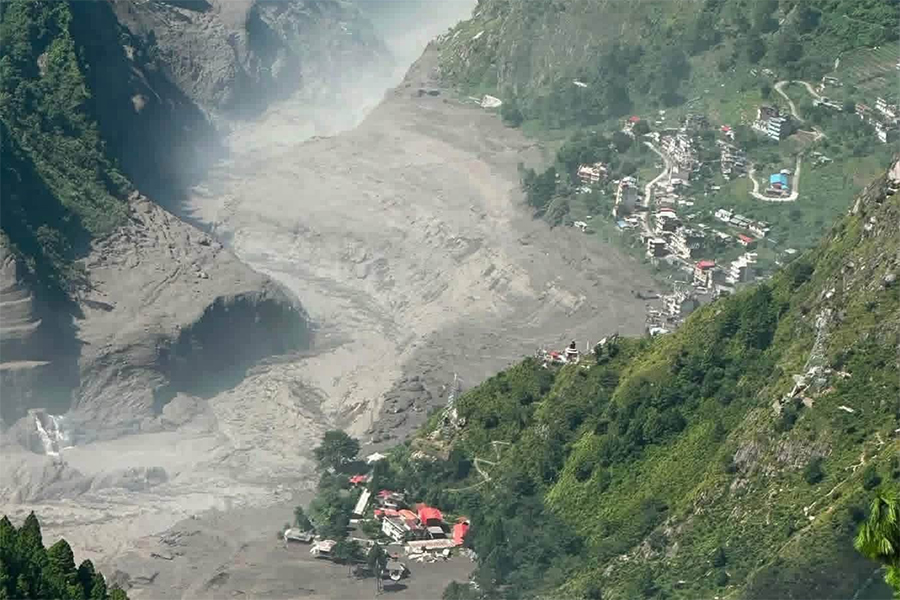
A sudden flood in Nepal's Bhotekoshi river on Wednesday was likely triggered by an ice avalanche and the subsequent formation and bursting of a debris lake, according to officials at the Department of Hydrology and Meteorology.
An icefall and landslide can be seen. An ice and debris lake formed and then burst. A dam was formed.
Binod Parajuli, chief of the department’s Flood Forecasting Division, stated that preliminary satellite imagery from Chinese authorities indicated debris had blocked the river about 20 kilometers upstream of the Miteri Bridge. This blockage created a temporary lake that eventually burst, releasing a destructive surge of water.
"An icefall and landslide can be seen," Parajuli said, describing the images. "An ice and debris lake formed and then burst. A dam was formed." He emphasized that the large volume of debris mixed with the water significantly increased its depth and destructive potential, making the event far more damaging than a clear water flood.
If it had been only clear water, it would not have caused this level of destruction. But once the debris mixed with the water, the depth increased significantly.
The preliminary assessment aligns with earlier reports suggesting an ice avalanche blocked the Lhende river. While officials are still working to conclusively determine if a glacial lake outburst also occurred, climate researcher Rijan Bhakta Kayastha noted that an earthquake registered on the Tibetan side around the same time could be a contributing factor. Glacial lake outbursts have occurred in the area previously, making it a possibility that requires further investigation.
There is information that an ice avalanche from the Nepal side blocked the Lhende river. An earthquake also occurred on the Tibetan side around the same time.
Shanti Mahat, spokesperson for the National Disaster Risk Reduction and Management Authority, confirmed that the agency received initial information about the ice avalanche from the International Centre for Integrated Mountain Development. However, she stressed that this is only an initial assessment and the focus remains on rescue and relief efforts. The exact cause will become clearer as investigations progress.
We have not received any official information yet. But ICIMOD has shared the information it received from the other side with us. This is only an initial assessment. We are focused on rescue and relief efforts for now. The cause will become clearer gradually.
DistantNews Editorial
Originally published by Kathmandu Post. Summarized and contextualized by our editorial team with added local perspective. Read our editorial standards.
More Stories

From Our Blog

What Gets Lost (and Found) When News Is Translated

The Critical Role of Diaspora Media in Global News

What Travellers Should Know About Countries with Restricted Press

A Digital Nomad's Guide to Following Local News

How the Same Story Looks Different in Different Countries
