


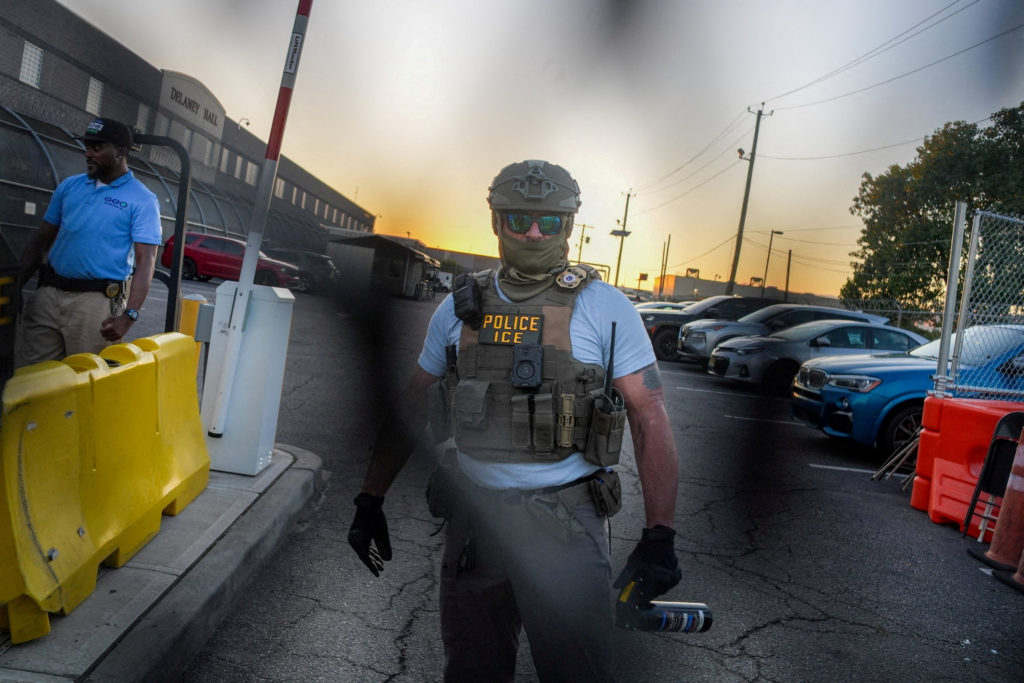
ICE director disputes AP reporting on body camera footage release policy
Translated from English, summarized and contextualized by DistantNews.
At a glance
News
Named sources
Context piece
- U.S. Immigration and Customs Enforcement's acting director criticized AP reporting on the agency's policy for releasing body-worn camera footage.
- The ICE policy states footage will be released only when deemed in the agency's
The acting director of U.S. Immigration and Customs Enforcement, David J. Venturella, has taken issue with The Associated Press's reporting on the agency's policy for releasing body-worn camera footage. The policy dictates that footage will be publicly released only when the agency determines it is in its "best interests."
ICE policy "clarifies that it's not appropriate to release footage when doing so could compromise investigations or privacy. This approach mirrors other federal law enforcement agencies' policies and is fully consistent with the Freedom of Information Act and the Privacy Act."
Venturella stated that the ICE policy "clarifies that it's not appropriate to release footage when doing so could compromise investigations or privacy." He asserted that this approach aligns with other federal law enforcement agencies and complies with the Freedom of Information Act and the Privacy Act. The policy, adopted in February 2025, calls for footage release in the immediate aftermath of serious injury or death in custody, ideally within 72 hours, if it serves the agency's "best interests."
ICE was "committed to transparency and accountability" and was "on track to equip every officer and agent in the field with body-worn cameras by the end of August."
He further explained that ICE may withhold or delay release if specific, compelling circumstances justify an objection, as determined by the ICE Director. Venturella emphasized ICE's commitment to transparency and accountability, noting that all officers and agents will be equipped with body-worn cameras by the end of August. He accused the AP of conflating the expedited release of footage after serious incidents with ICE's broader authority regarding body-worn camera footage.
In some ways, ICE is saying the quiet part out loud.
Christopher Schneider, a sociology professor at Brandon University, commented that while selective releases are common in law enforcement, ICE's policy is unusually explicit. He suggested that ICE is "saying the quiet part out loud." The AP reported that policies vary among agencies, citing examples of major police departments that routinely release footage. The report also noted that ICE's sister agency, Customs and Border Protection, has not released footage of a fatal shooting in Minneapolis, with Commissioner Rodney Scott stating it was part of an ongoing investigation.
it was part of an investigation and would be made public "when it's appropriate."
DistantNews Editorial
Originally published by PBS NewsHour in English. Translated, summarized, and contextualized by our editorial team with added local perspective. Read our editorial standards.
More Stories

From Our Blog

How the Same Story Looks Different in Different Countries

What Gets Lost (and Found) When News Is Translated

The Critical Role of Diaspora Media in Global News

What Travellers Should Know About Countries with Restricted Press

A Digital Nomad's Guide to Following Local News
