

IEA Oil Market Report Highlights Global Risks as Kazakhstan Seeks to Stabilize Production
Summarized and contextualized by DistantNews.
At a glance
News
Sources not specified
Context piece
- Global oil markets face sharp volatility with declining demand and supply disruptions, according to the IEA.
- Kazakhstan, a major producer, is working to stabilize output amid these global shifts.
- The country's key oil projects and export routes, like the CPC, are crucial for its role in energy supply.
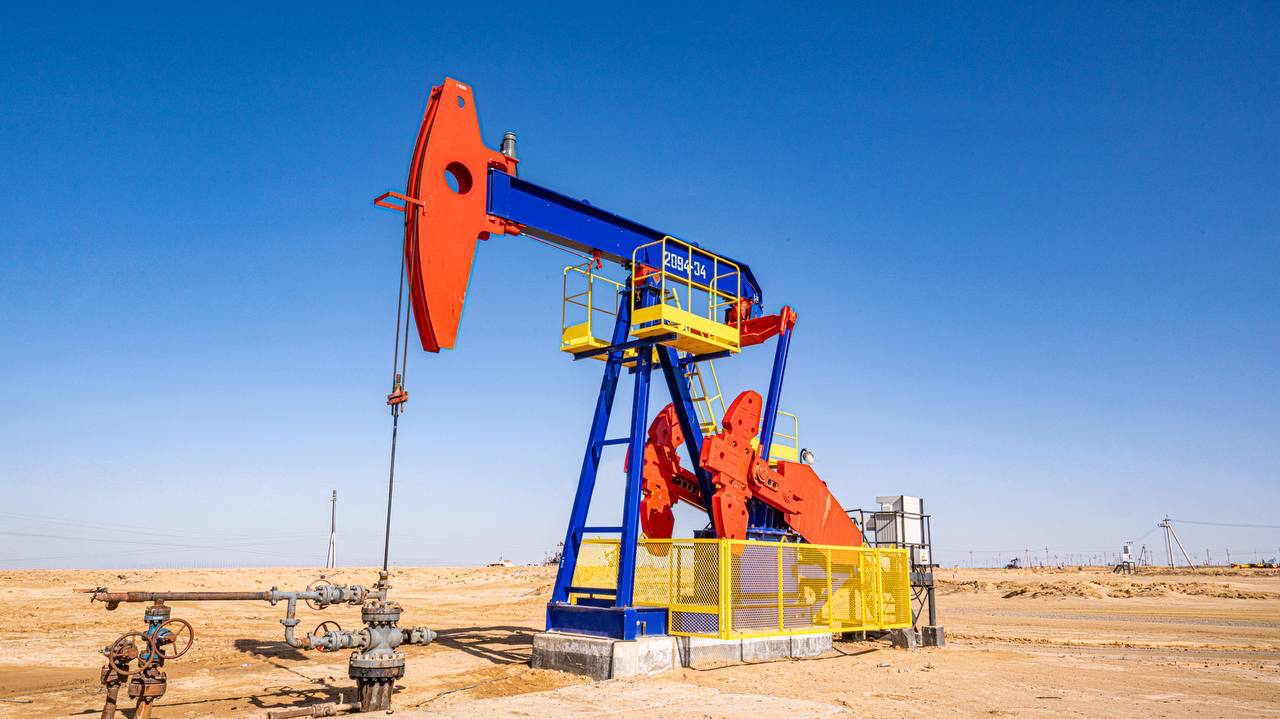
Global oil markets are entering a period of significant volatility, marked by anticipated demand decline and ongoing supply disruptions that are reshaping trade flows, according to the International Energy Agency's (IEA) latest monthly report. For Kazakhstan, Central Asia's largest oil producer, these global dynamics are particularly pertinent as the nation strives to restore production at its major fields and maintain its position in the global energy landscape.
The IEA forecasts a decline in global oil demand by 420,000 barrels per day in 2026, reaching 104 million barrels per day. This projection is 1.3 million barrels per day lower than pre-conflict estimates, with the petrochemical and aviation sectors expected to see the steepest falls. The report attributes this trend to higher prices, a worsening economic environment, and demand-saving measures.
For now, the steepest losses are seen in the petrochemical sector where feedstock availability is becoming increasingly constrained. Aviation activity is also running well below normal levels, helping to ease some of the pressure on jet fuel prices, which nearly tripled after Middle Eastern exports were cut off. Higher prices, a deteriorating economic environment and demand-saving measures will further weigh on global oil consumption.
Global oil supply also saw a decrease of 1.8 million barrels per day in April. While disruptions in the Middle East contributed, producers outside the region, including Kazakhstan, have increased output, bolstering Atlantic Basin crude flows. Kazakhstan's three largest projects – Tengiz, Kashagan, and Karachaganak – are the cornerstones of its oil industry. However, the country faces vulnerabilities related to operational disruptions and its reliance on export routes, primarily the Caspian Pipeline Consortium (CPC) to Novorossiysk, Russia.
Official data from Kazakhstan's Energy Ministry indicates a production decrease in early 2026 compared to the previous year, linked to earlier disruptions affecting the CPC and the Tengiz field. While global market conditions present both opportunities for export revenues and risks due to infrastructure stability, Kazakhstan's efforts to restore output and its role as a significant contributor to global supply flows remain central to its energy strategy.
Global supply losses have been partly offset by higher flows from the Atlantic Basin, with exports up 3.5 mb/d [million barrels per day] since the start of the war [in the Middle East]. The United States, Kazakhstan, Russia and Venezuela provided most of the increase.
DistantNews Editorial
Originally published by The Astana Times. Summarized and contextualized by our editorial team with added local perspective. Read our editorial standards.
More Stories

From Our Blog

What Gets Lost (and Found) When News Is Translated

The Critical Role of Diaspora Media in Global News

What Travellers Should Know About Countries with Restricted Press

A Digital Nomad's Guide to Following Local News

How the Same Story Looks Different in Different Countries
