

Illegal Semeru climber rescued after four-day operation
Translated from Indonesian, summarized and contextualized by DistantNews.
At a glance
News
Sources not specified
Outcome reported
- A hiker, Cakra (18), was successfully rescued from a 375-meter-deep ravine on Mount Semeru after a four-day operation.
- The rescue was challenging due to the extreme terrain, including steep slopes, lack of secure anchors, landslide risks, volcanic dust, and thick fog.
- Cakra had illegally climbed Semeru while it was closed due to volcanic activity and suffered serious injuries to his right leg.
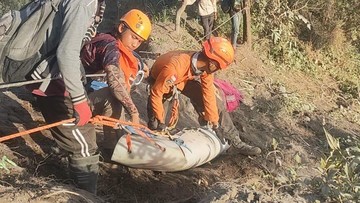
After a grueling four-day operation, a joint SAR team has successfully rescued 18-year-old Cakra from a deep ravine on Mount Semeru in East Java. The illegal climber, who fell into a 375-meter-deep chasm, was evacuated on Friday evening.
The rescue was fraught with difficulties. SAR teams navigated treacherous terrain, employing a slope rescue method with a foldable stretcher pulled by a rope system. They contended with steep paths, unstable anchor points, landslide threats, volcanic dust, and dense fog that severely limited visibility. "Information from the team on the ground indicated that the ground surface in some locations was covered in volcanic dust. As afternoon approached, the SAR team had to be more careful as fog began to obscure their vision," said Nanang Sigit, head of the Surabaya SAR Office.
Information from the team on the ground indicated that the ground surface in some locations was covered in volcanic dust. As afternoon approached, the SAR team had to be more careful as fog began to obscure their vision.
The challenging conditions forced the rescue team to take breaks to regain strength. At one point, the SAR post dispatched four additional personnel to provide logistics and support the ongoing rescue efforts. Cakra had illegally ascended Semeru via the Candi Jawar Purbakala route on May 30, while the mountain was closed due to volcanic activity. He fell into the ravine on June 1.
Fortunately, Cakra managed to send his last known coordinates to his parents before losing contact. Upon reaching him, SAR personnel found he had sustained serious injuries to his right leg, which was splinted to minimize movement and swelling. The evacuation from the ravine to a collection point above was conducted in stages, with strict safety measures in place, before Cakra was carried to the post and received emergency medical treatment.
To minimize movement and prevent further swelling, the survivor's leg had to be splinted.
DistantNews Editorial
Originally published by CNN Indonesia in Indonesian. Translated, summarized, and contextualized by our editorial team with added local perspective. Read our editorial standards.
More Stories


From Our Blog

What Gets Lost (and Found) When News Is Translated

The Critical Role of Diaspora Media in Global News

What Travellers Should Know About Countries with Restricted Press

A Digital Nomad's Guide to Following Local News

How the Same Story Looks Different in Different Countries
