

IMF Economist Warns of New Global Economic Order, Questions Dollar Dominance and Sanctions
Translated from Romanian, summarized and contextualized by DistantNews.
At a glance
Analysis
Named sources
Context piece
- The IMF's chief economist warns of global economic uncertainty driven by geopolitical tensions and risks.
- While the global financial system remains dollar-centric, rapid releases from strategic oil reserves prevented a steeper price hike after Middle East conflict.
- The economist notes accelerating reconfiguration of global trade flows, with the EU forging new agreements, and questions the long-term effectiveness of economic sanctions.
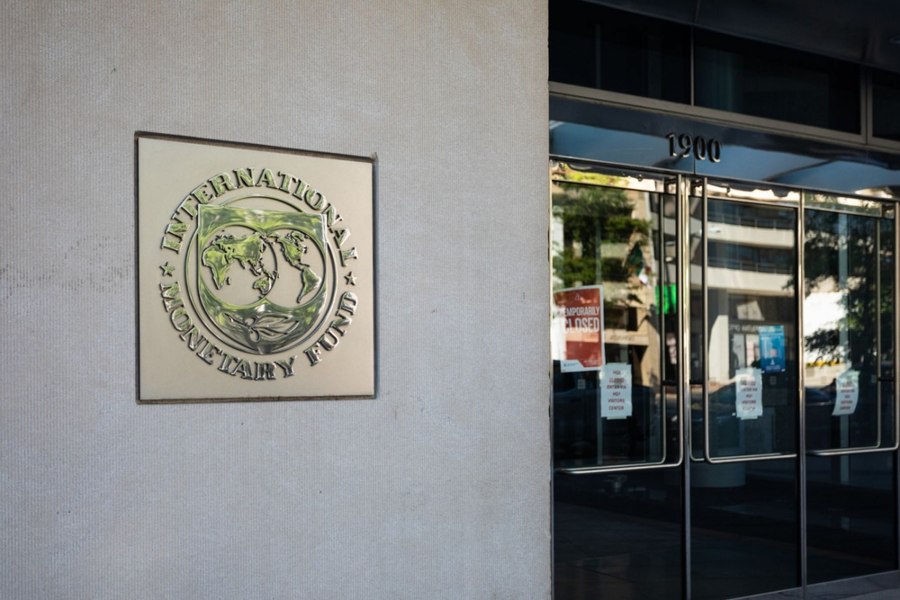
The global economy faces persistent uncertainty, geopolitical tensions, and significant risks, according to Pierre-Olivier Gourinchas, the outgoing chief economist of the International Monetary Fund (IMF). Gourinchas, who is returning to the University of California, Berkeley, highlighted these challenges in an interview with Reuters, emphasizing that the global financial system remains centered on the U.S. dollar.
Economists must be humble.
He noted that rapid releases from strategic oil reserves successfully averted a more substantial price increase following the outbreak of conflict in the Middle East. However, these reserves are now "considerably diminished," limiting nations' capacity to respond should violence escalate again. Gourinchas explained that only about 3% of global oil supply was removed from the market, contrary to initial estimates of 10–15%, thanks to coordinated interventions and swift adjustments by refineries. A potential failure of the fragile truce between the United States and Iran could amplify economic risks.
The IMF is set to release new forecasts on July 8. Gourinchas suggested the institution might revert to a baseline scenario after presenting three alternative scenarios in April due to high uncertainty. "Economists must be humble," he stated, explaining that the lack of historical precedents made accurate forecasting for 2025 and 2026 difficult.
It is not a coincidence. You cannot afford not to deepen trade relations with other countries.
On the trade front, Gourinchas observes an acceleration in the reconfiguration of global flows, partly driven by tariffs imposed by the Trump administration. The European Union, for instance, has finalized trade agreements with Latin America and India after decades of negotiations, with many of these new arrangements excluding the United States. "It is not a coincidence. You cannot afford not to deepen trade relations with other countries," Gourinchas remarked.
There is a view that such levers are essential, but what we see is how quickly the global economy tries to find ways to circumvent them.
He also reiterated the limitations of economic sanctions, stating, "There is a view that such levers are essential, but what we see is how quickly the global economy tries to find ways to circumvent them." In his view, these tools offer only short-term influence as targeted nations seek alternatives, innovate, or diversify their trade partnerships. "In the medium and long term, they almost never work," he concluded. Despite efforts by some countries to diversify reserves, Gourinchas affirmed that these adjustments remain marginal compared to the dominant role of the U.S. dollar in the global financial system.
In the medium and long term, they almost never work.
DistantNews Editorial
Originally published by Adevărul in Romanian. Translated, summarized, and contextualized by our editorial team with added local perspective. Read our editorial standards.
More Stories

From Our Blog

What Gets Lost (and Found) When News Is Translated

The Critical Role of Diaspora Media in Global News

What Travellers Should Know About Countries with Restricted Press

A Digital Nomad's Guide to Following Local News

How the Same Story Looks Different in Different Countries
