

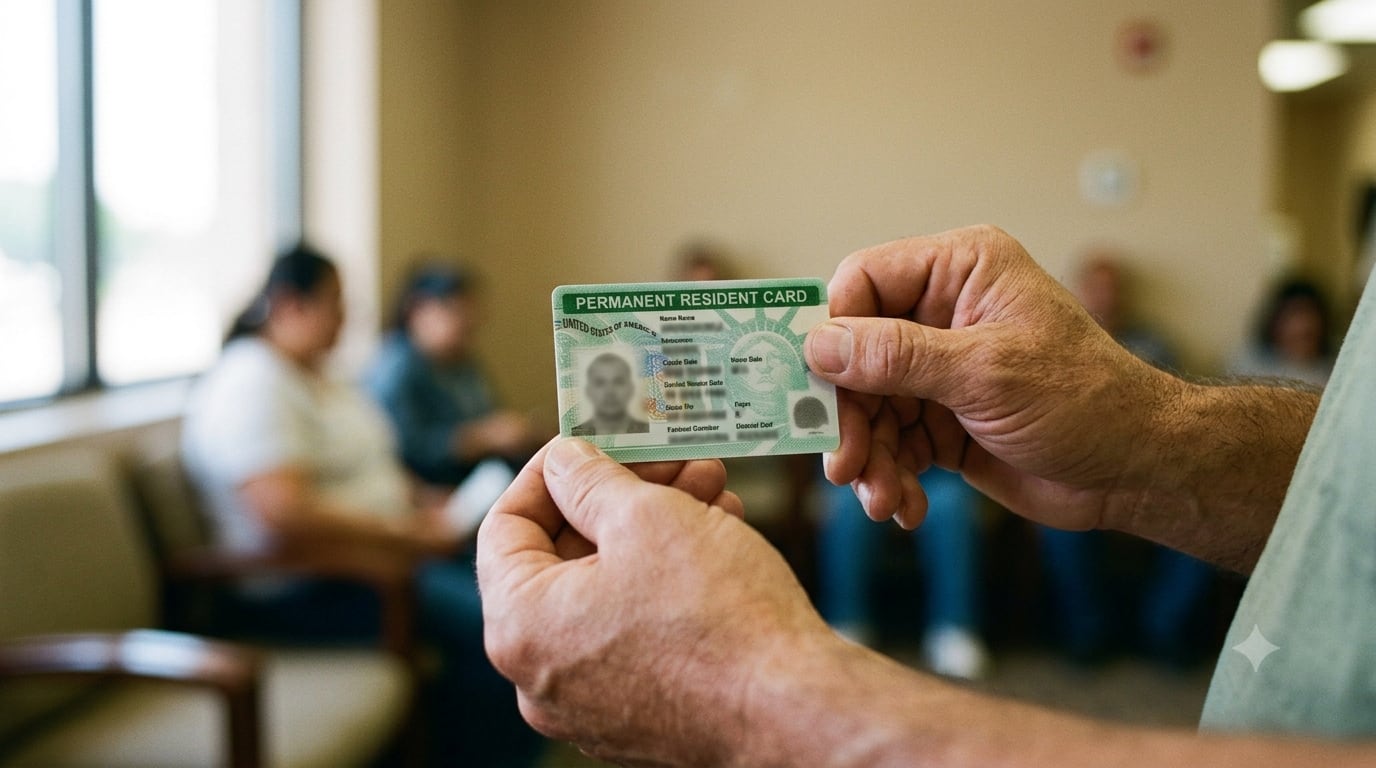

Immigration Lawyer: Errors That Can Lead a Migrant to Lose Their Green Card Today
Translated from Spanish, summarized and contextualized by DistantNews.
At a glance
News
Named sources
Context piece
- Immigration lawyer Elizabeth Amarán details how migrants can lose their green cards due to legal or administrative errors.
- Errors include receiving a green card before the required one-year-and-one-day period with parole, or traveling abroad with pending criminal charges.
- A Supreme Court ruling allows border officials to treat returning residents with certain criminal records as applicants for admission, potentially leading to removal proceedings.
U.S. immigration lawyer Elizabeth Amarán has outlined critical errors that could jeopardize a migrant's green card status. She explained that receiving a green card before completing the mandatory "year and a day" with parole status can lead to its revocation. Amarán noted that if an immigration officer notices the discrepancy in dates, they have the authority to declare the residency "granted in error" and immediately cancel it. This administrative mistake can also hinder future applications for U.S. citizenship.
was granted in error
Amarán strongly advises proactively informing officials about such errors before proceeding with citizenship applications or other immigration processes. Another significant risk arises during the adjustment of status process. Departing the U.S. while a case is pending could compromise re-entry if the individual accrued unlawful presence before their initial application. To mitigate this, Amarán suggests obtaining official travel documents and demonstrating "extraordinary circumstances" to authorities.
under no circumstances can travel
Furthermore, Amarán warned that residents with pending criminal charges should "under no circumstances travel" abroad. This prohibition extends to vacation destinations like Punta Cana and cruises, although travel within the U.S. remains permissible. The lawyer referenced the Supreme Court's recent ruling in Blanche v. Lau, which impacts returning permanent residents with records or charges related to crimes of moral turpitude.
Punta Cana
This decision allows Customs and Border Protection (CBP) officers to treat such residents as applicants for admission upon reentry. They may not need to immediately prove commission of the crime with clear and convincing evidence. In practice, this can result in the individual being placed on immigration parole and facing removal proceedings. Amarán reiterated that receiving residency prematurely can also block future access to citizenship.
was granted in error
DistantNews Editorial
Originally published by La Nación in Spanish. Translated, summarized, and contextualized by our editorial team with added local perspective. Read our editorial standards.
More Stories



From Our Blog

What Gets Lost (and Found) When News Is Translated

The Critical Role of Diaspora Media in Global News

What Travellers Should Know About Countries with Restricted Press

A Digital Nomad's Guide to Following Local News

How the Same Story Looks Different in Different Countries
