


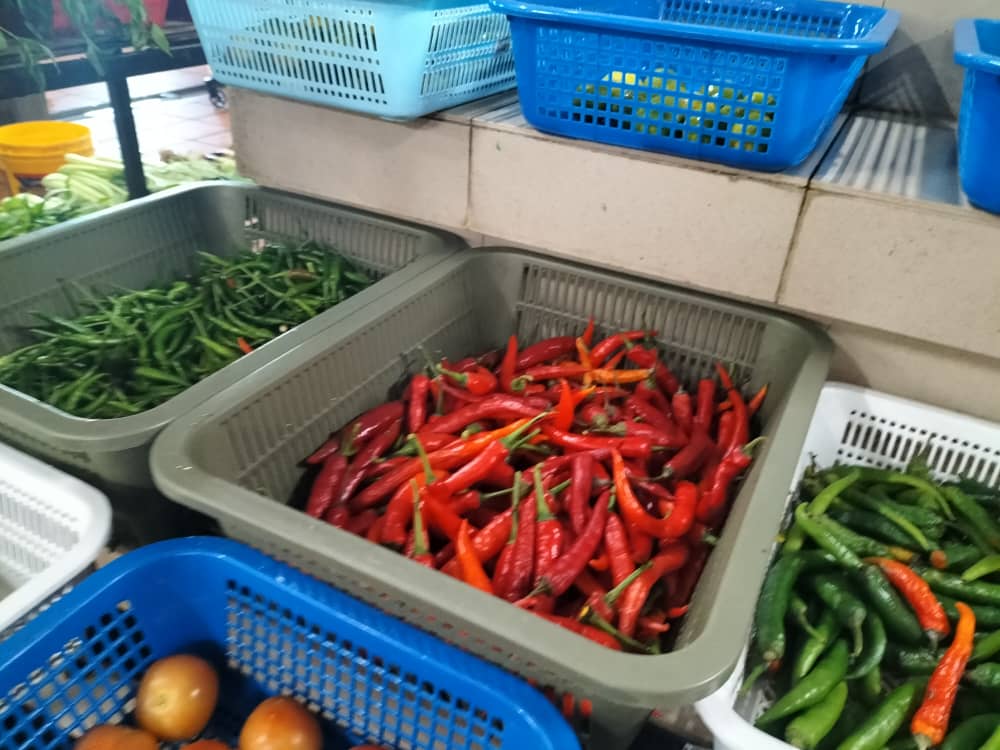
Imported chili floods Malaysian market, devastating local farmers
Translated from Malay and summarized by DistantNews. Read the original for the full story.
At a glance
News
From a news agency
Context piece
- Around 300 tons of imported red chili from China and Vietnam are flooding the Malaysian market, severely affecting over 4,000 local farmers.
- The oversupply has caused local farmers' incomes to drop by up to 26%, with net profits averaging only RM1,760 per month.
- Farmers and agricultural bodies are urging the government to implement stricter controls on imported produce to protect local production and ensure food security.
An overwhelming flood of imported red chili from China and Vietnam has crippled the livelihoods of more than 4,000 local farmers in Malaysia, leading to a significant drop in their earnings.
Approximately 300 tons of these imported chilies are entering the country and being sold without adequate control, causing a market glut. This oversupply has resulted in a staggering 26% decrease in income for local farmers, who are now earning an estimated net profit of only RM1,760 per month. The situation has been exacerbated by the involvement of around 50 cartels competing within the import market, further disrupting local supply chains.
Imagine, every day, about 20 containers of red chili, each containing 16 tons of imported red chili, enter the country. That's why there's an oversupply that will affect the income of local farmers. This could destroy local production in the long run.
Dr. Ab. Razak Khasbullah, chairman of the Selangor State Farmers' Association, highlighted that this problem of oversupply has persisted for over a decade. He pointed out that the rising costs of production, including seeds, fertilizers, pesticides, and labor, make it increasingly difficult for local farmers to compete. "Imagine, every day, about 20 containers of red chili, each containing 16 tons of imported red chili, enter the country. That's why there's an oversupply that will affect the income of local farmers. This could destroy local production in the long run," he stated.
This is very dangerous because when that situation occurs, exporters can monopolize the commodity price as we have to rely on imported products. Prices can skyrocket and the government may not be able to control them anymore.
Concerns are mounting that if this trend continues, local productivity will decline, leading to a greater dependency on imports. This reliance on foreign produce poses a significant risk, as exporters could potentially monopolize prices, driving up costs to levels unaffordable for the government and consumers. "This is very dangerous because when that situation occurs, exporters can monopolize the commodity price as we have to rely on imported products. Prices can skyrocket and the government may not be able to control them anymore," Ab. Razak warned.
To address this crisis, Ab. Razak urged the government to implement drastic measures to control the excessive import of agricultural produce. He stressed the need for stronger price control mechanisms and supply chain monitoring to ensure local farmers receive fair prices and are not forced to sell their produce below production costs. "The government also needs to ensure that the entry of imported chili does not affect local production because farmers need market guarantees to continue cultivating this crop. If farmers continue to suffer losses, who will grow chili for the country's needs in the future? We don't want to be completely dependent on imports when a supply crisis occurs," he added. Zainudin Misrom, a chili farmer, corroborated these concerns, noting that his income has fallen by an average of 26%, with his net profit for five months amounting to only RM8,800, or approximately RM1,760 per month.
The government also needs to ensure that the entry of imported chili does not affect local production because farmers need market guarantees to continue cultivating this crop. If farmers continue to suffer losses, who will grow chili for the country's needs in the future? We don't want to be completely dependent on imports when a supply crisis occurs.
About this summary
Originally published by Utusan Malaysia in Malay. Translated, summarized, and contextualized automatically by DistantNews, with a note on how the source frames the story. Not individually reviewed before publishing. How this works.
More Stories


From Our Blog

What Gets Lost (and Found) When News Is Translated

The Critical Role of Diaspora Media in Global News

What Travellers Should Know About Countries with Restricted Press

A Digital Nomad's Guide to Following Local News

How the Same Story Looks Different in Different Countries
