

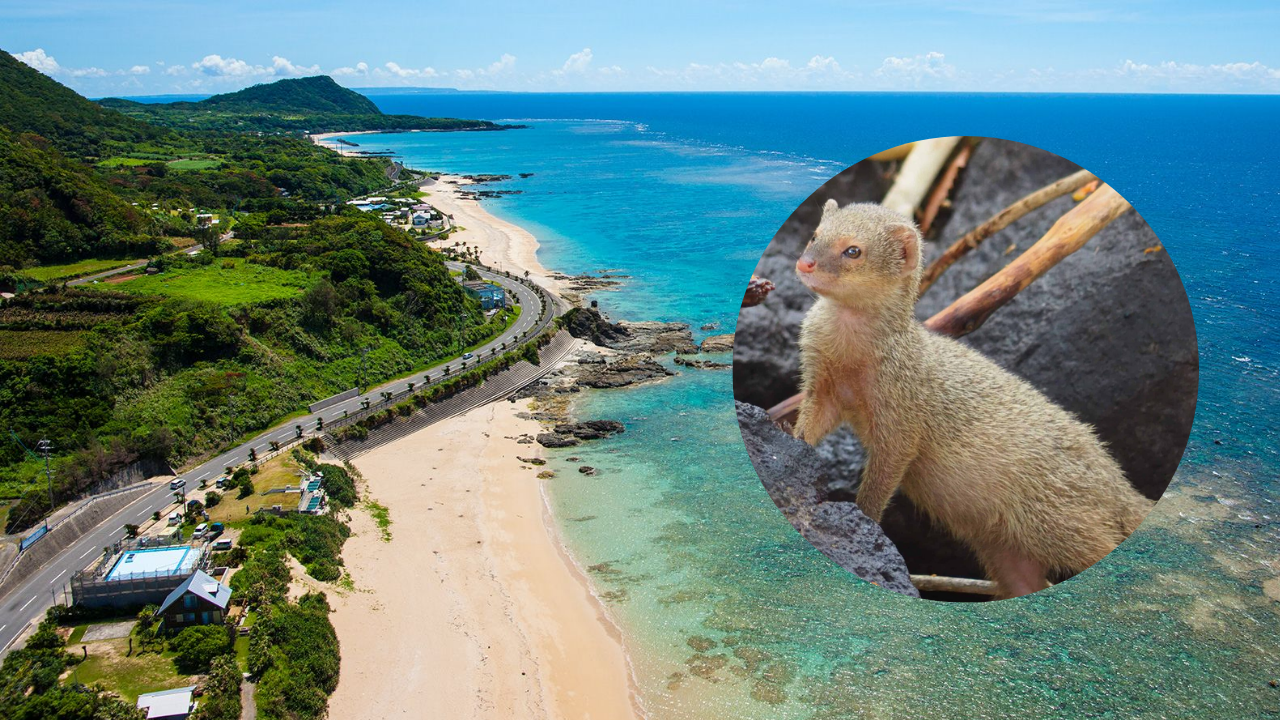
In 1979, about 30 mongooses were released on Japan’s Amami Oshima to control habu snakes
Summarized and contextualized by DistantNews.
At a glance
News
Official statement
Outcome reported
- Japan has officially declared the eradication of the invasive small Indian mongoose on Amami Oshima island.
- The mongoose was introduced in 1979 to control venomous habu snakes but instead preyed on native wildlife.
- A 20-year eradication program involving trapping and monitoring has successfully removed the predators.
Japan has officially declared the successful eradication of the invasive small Indian mongoose on Amami Oshima, a UNESCO World Heritage-listed island. This announcement marks the end of a decades-long ecological crisis that began with a failed biological control attempt.
The problem originated in 1979 when local authorities released approximately 30 small Indian mongooses onto Amami Oshima. The intention was to control the population of venomous habu snakes, which posed a danger to residents. However, the plan backfired as the mongooses, active during the day, preyed on native species like birds, small mammals, amphibians, and reptiles, which had evolved without significant mammalian predators.
The mongoose population exploded, reaching an estimated 10,000 by 2000 and impacting over 80 percent of the island's land area. This surge led to severe declines in rare native species, including the endangered Amami rabbit, Amami woodcock, Ryukyu long-furred rat, and Ishikawa’s frog. Ministry records showed a sharp drop in Amami rabbit sightings as mongoose numbers peaked in the late 1990s.
Recognizing the threat, the Japanese government classified the mongoose as a Specified Invasive Alien Species. A comprehensive eradication program commenced in 2000, involving the Ministry of the Environment, Kagoshima Prefecture, and local governments. By 2005, a dedicated team known as the "Amami Mongoose Busters" was formed. This team established an extensive network of controls across the island's forests, deploying tens of thousands of live-capture and motion-triggered camera traps. At the campaign's peak, up to 30,000 traps were maintained simultaneously, regularly checked by rangers, with specially trained sniffer dogs assisting in locating mongoose scent. The last confirmed mongoose capture occurred recently, concluding the extensive effort.
DistantNews Editorial
Originally published by Times of India. Summarized and contextualized by our editorial team with added local perspective. Read our editorial standards.
More Stories



From Our Blog

What Press Freedom Means for the News You Read

What Gets Lost (and Found) When News Is Translated

The Critical Role of Diaspora Media in Global News

What Travellers Should Know About Countries with Restricted Press

A Digital Nomad's Guide to Following Local News
