


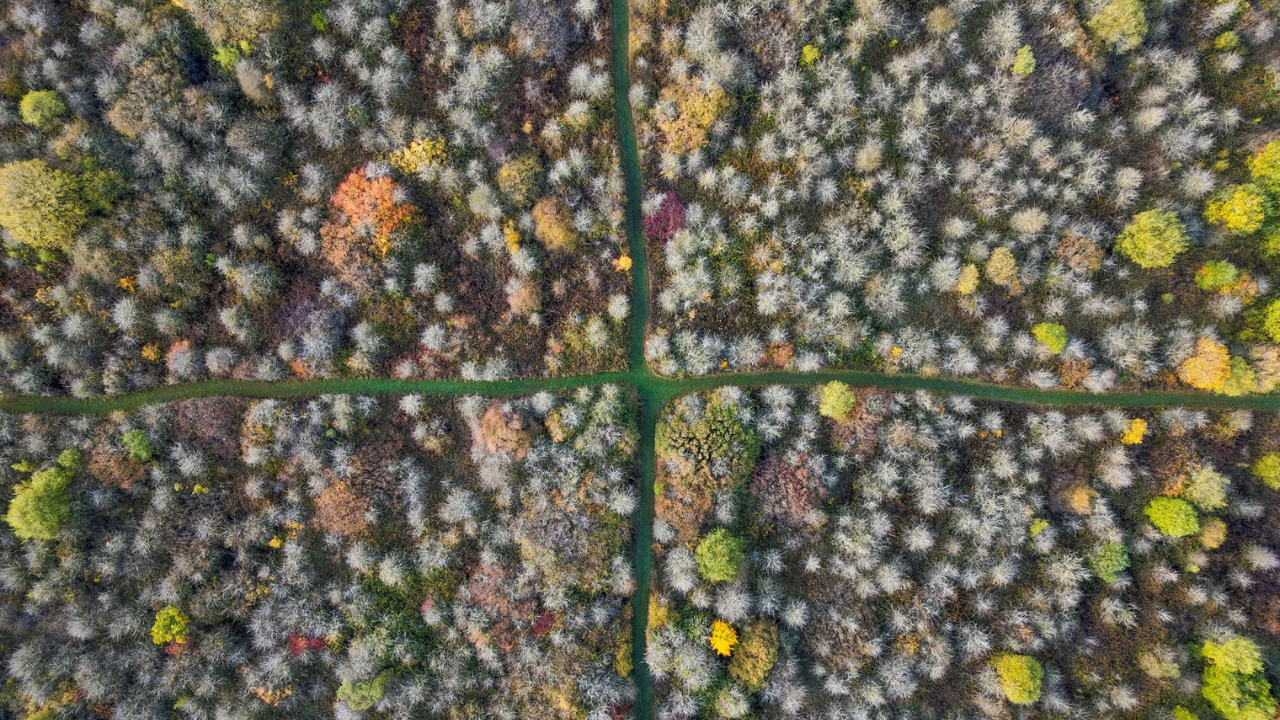
In 1988, an English farmer stopped cultivating his entire 377-acre wheat farm
Summarized and contextualized by DistantNews.
At a glance
News
Named sources
Outcome reported
- An English farmer stopped cultivating his 377-acre wheat farm in 1988, protesting government agricultural policies.
- The land, now known as Strawberry Hill, has naturally transformed into one of central England's largest young woodland nature reserves.
- The Wildlife Trust has purchased the land permanently after a successful £1.5 million crowdfunding campaign.
A 377-acre farm in Bedfordshire, England, once dedicated to intensive wheat cultivation, has been permanently protected as a nature reserve thanks to a public fundraising effort. Strawberry Hill, near Knotting, has been purchased by the Wildlife Trust for Bedfordshire, Cambridgeshire and Northamptonshire (BCN) after a crowdfunding campaign successfully raised £1.5 million.
For 35 years, the land remained largely untouched after its owner, Hugh White, ceased farming operations in 1988. He had become disillusioned with government agricultural policies and chose to enter the European Union's set-aside scheme, which encouraged farmers to leave land fallow. When the financial incentives ended, White opted not to resume farming, allowing nature to reclaim the fields.
Over three decades, the former agricultural land evolved naturally into a diverse habitat featuring hawthorn bushes, scrubland, grassland, and young woodland. Ecological surveys by the BCN Wildlife Trust indicate that the site now provides crucial habitat for threatened bird species, including roughly half of all breeding nightingales recorded in Bedfordshire. White himself had reportedly enjoyed observing the transformation of his fields into a haven for barn owls and other farmland birds.
Following the passing of Hugh White and his wife, their children sought a buyer committed to preserving the land's natural state. The Wildlife Trust initially managed the site through a lease, supported by conservation loans and grants. A significant boost to the final purchase came after The Guardian published an article about the farm's unique history, galvanizing public support and donations to reach the £1.5 million target.
DistantNews Editorial
Originally published by Times of India. Summarized and contextualized by our editorial team with added local perspective. Read our editorial standards.
More Stories

From Our Blog

What Press Freedom Means for the News You Read

What Gets Lost (and Found) When News Is Translated

The Critical Role of Diaspora Media in Global News

What Travellers Should Know About Countries with Restricted Press

A Digital Nomad's Guide to Following Local News
