


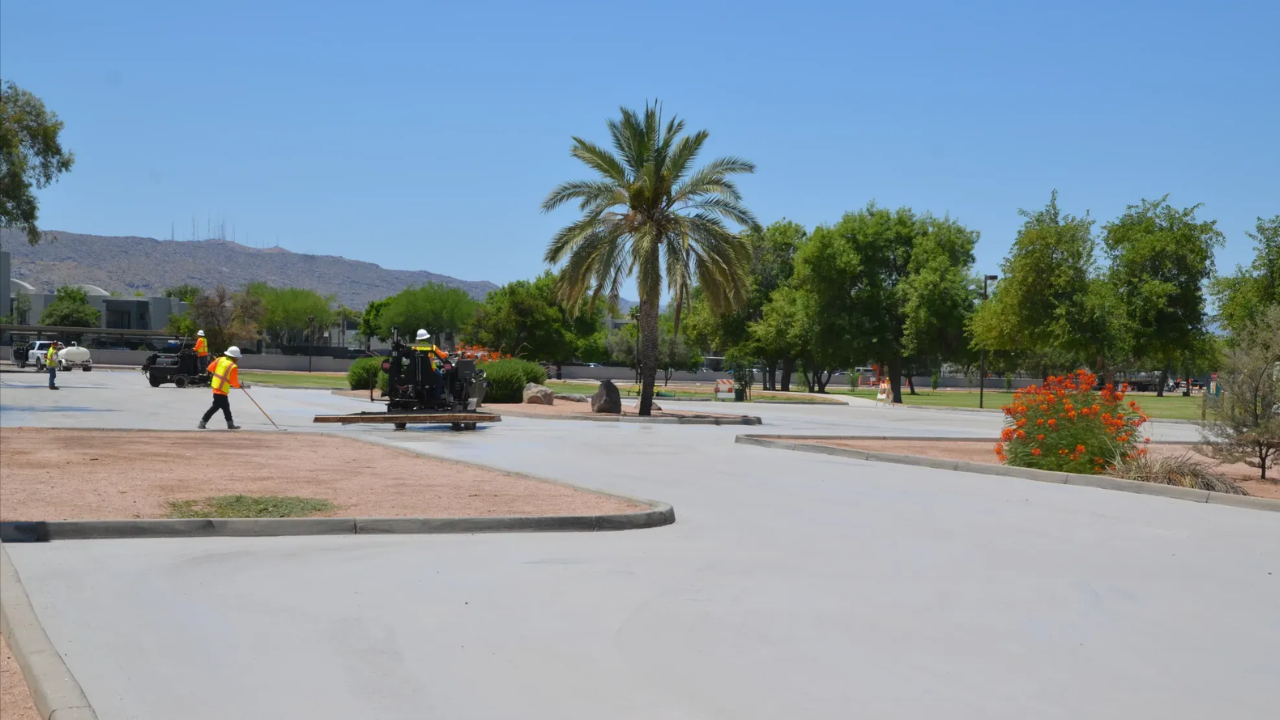
In 2020, Phoenix coated 36 miles of roads to fight extreme heat; surfaces became 12°F cooler at noon
Summarized and contextualized by DistantNews.
At a glance
News
Documents & data
Outcome reported
- Phoenix coated 36 miles of roads with a reflective material in 2020 to combat extreme heat.
- The treated surfaces showed a 12°F reduction in temperature at noon compared to untreated roads.
- Researchers noted that while the coating cools roads, it can increase heat exposure for pedestrians and recommended integrating shade solutions.
In 2020, the city of Phoenix implemented a large-scale project, coating 36 miles of its roads with a special reflective material. This initiative aimed to combat the urban heat island effect, a phenomenon where cities experience higher temperatures than surrounding rural areas.
The treatment proved effective in reducing surface temperatures. Researchers observed that the coated roads were, on average, 12°F cooler at noon compared to conventional asphalt. This cooling effect could potentially mitigate some of the extreme heat experienced in the desert city.
However, the study also highlighted a potential drawback. While the roads themselves became cooler, the reflective surfaces inadvertently increased heat radiation exposure for pedestrians walking nearby. The researchers emphasized that while reflective coatings are a useful tool, they are not a complete solution. They concluded that integrating shade from trees and buildings is crucial for improving human comfort and recommended that cities explore a variety of strategies to address rising temperatures effectively.
incorporating shade from trees and buildings is essential for enhancing human comfort, suggesting cities explore a variety of solutions beyond just reflective coatings to address rising temperatures.
DistantNews Editorial
Originally published by Times of India. Summarized and contextualized by our editorial team with added local perspective. Read our editorial standards.
More Stories

From Our Blog

What Press Freedom Means for the News You Read

What Gets Lost (and Found) When News Is Translated

The Critical Role of Diaspora Media in Global News

What Travellers Should Know About Countries with Restricted Press

A Digital Nomad's Guide to Following Local News
