


In China, people brave simulated typhoons to prepare for the real thing
Summarized and contextualized by DistantNews.
At a glance
News
From a news agency
Context piece
- A training center in Hangzhou, China, offers simulated typhoon and flood experiences to prepare people for extreme weather events.
- Participants pay to experience wind speeds up to 165 km/h and surging water to raise disaster preparedness awareness.
- Climate change is increasing the frequency and intensity of extreme weather in China, with the El Nino pattern expected to fuel more typhoons in 2026.
In Hangzhou, eastern China, individuals like 34-year-old cafe owner Huang Zhen are braving simulated typhoons and flash floods to prepare for increasingly extreme weather. For 1,599 yuan (S$304) per day, the Lvxing Disaster Simulation Training Centre provides a realistic, albeit controlled, experience of nature's fury.
Over the last two years, the weather has become increasingly unpredictable.
Participants don protective gear and are subjected to wind speeds reaching 165 km/h, torrential rain, and massive volumes of water designed to mimic mountain floods and urban inundation. Huang Zhen noted that the unpredictable weather of the past two years has made such drills essential for raising awareness and understanding of disaster scenarios.
Such drills, he added, “gives us a better idea of what different levels of disasters might actually be like, and helps raise our awareness of disaster preparedness”.
Scientists link the rise in destructive weather events in China to climate change, with the emergence of the El Nino weather pattern in 2026 expected to exacerbate the situation by driving up temperatures and fueling more intense typhoons. China's National Climate Centre forecasts a higher-than-average number of typhoons forming in the North-west Pacific and South China Sea this July.
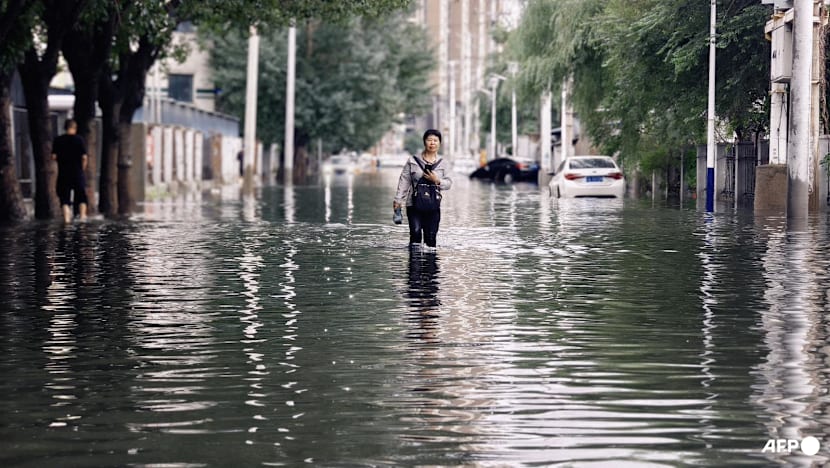
Typhoon Bavi hit just a couple of days ago, making people realise that typhoon hazards are far more of a threat than we thought.
Typhoon Bavi recently caused severe floods and evacuations, underscoring the growing threat. Since opening in May 2025, the Hangzhou center has hosted over 160,000 participants. Plans are underway to open five more centers across China within three years, offering simulations for other disasters like fires and earthquakes. For those unable to attend, chief instructor Wang Kuanghan advises the simplest survival skill during a typhoon: stay indoors.
If you ask me, the most important survival skill during a typhoon is simply not to go outside.
DistantNews Editorial
Originally published by The Straits Times. Summarized and contextualized by our editorial team with added local perspective. Read our editorial standards.
More Stories

From Our Blog

What Gets Lost (and Found) When News Is Translated

The Critical Role of Diaspora Media in Global News

What Travellers Should Know About Countries with Restricted Press

A Digital Nomad's Guide to Following Local News

How the Same Story Looks Different in Different Countries
