


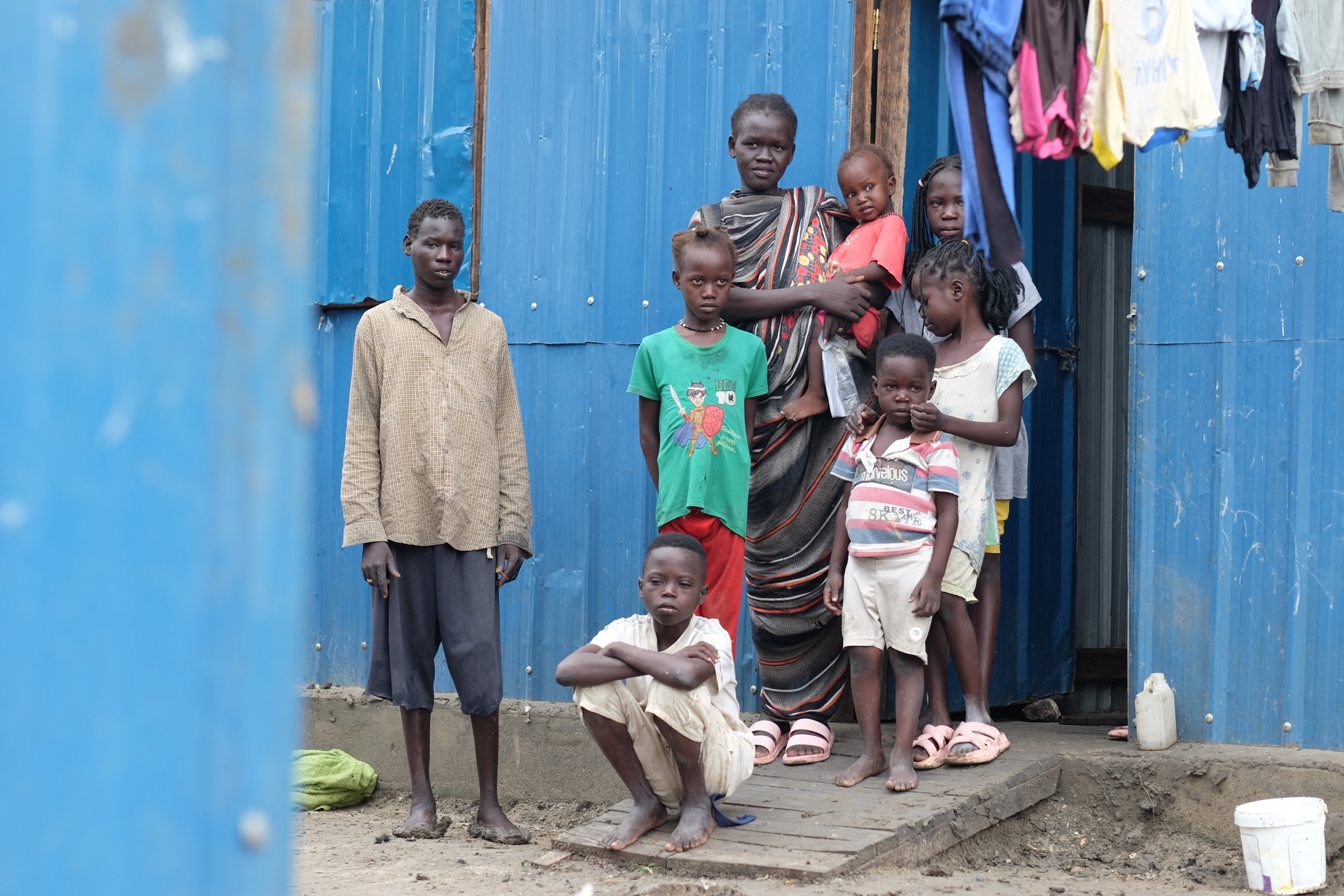
In Malakal Camp: "People will run for their lives"
Translated from German, summarized and contextualized by DistantNews.
At a glance
In-depth
Sources not specified
Ongoing story
- Nabila David and her seven children are living in a makeshift shelter in the Bulukat refugee camp in Malakal, South Sudan, after fleeing Sudan.
- They were forced to leave their home in Khartoum by soldiers due to their South Sudanese heritage, facing an uncertain journey to Bentiu.
- The camp, intended as a temporary transit point, has become a long-term settlement for many, with aid organizations struggling to manage the influx.
Nabila David and her seven children now call a simple blue tin hut, marked B 31, their home in the Bulukat refugee camp in Malakal. With no bed, table, or running water, it offers only basic shelter from the elements. Stray dogs sleep on the dusty ground, and children play barefoot in puddles left by recent rains, a brief respite from the oppressive heat that can reach 40 degrees Celsius.
Surviving in South Sudan is very difficult.
"Surviving in South Sudan is very difficult," says Nabila, who arrived at the camp two weeks ago after fleeing Sudan. She and her sister, along with the seven children, were transported on an overcrowded wooden barge along the Nile River. They were heading to Malakal, a city in northern Sudan, the country their parents had fled years prior. Nabila, 33, was born and raised in Sudan, working as a laundress for other families until soldiers ordered her family to leave due to their South Sudanese origins.
Soldiers stood outside their door. They loaded her, her sister, and the seven children onto one of four trucks.
Soldiers arrived at their home and ordered Nabila, her sister, and the seven children onto one of four trucks. At the border with South Sudan, they were forced to disembark with nothing but the clothes on their backs. They carried only the names of relatives in Bentiu, a city unfamiliar to them in a new country. To reach Bentiu, they, like over a hundred thousand others, must pass through the Bulukat camp in Malakal, established in May 2023 when the first refugee boats arrived on the muddy banks of the Nile.
You must disappear.
Initially conceived as a transit camp operated by the UN Refugee Agency and the International Organization for Migration, Bulukat was intended for stays of no more than a week. However, many refugees find themselves stranded. Aid workers report that some families have been waiting for over a year for onward travel to other parts of the country. "You must disappear," they told Garang, referring to the directive to leave.
Families have been waiting for more than a year for onward travel to other parts of the country.
DistantNews Editorial
Originally published by Die Presse in German. Translated, summarized, and contextualized by our editorial team with added local perspective. Read our editorial standards.
More Stories


From Our Blog

What Gets Lost (and Found) When News Is Translated

The Critical Role of Diaspora Media in Global News

What Travellers Should Know About Countries with Restricted Press

A Digital Nomad's Guide to Following Local News

How the Same Story Looks Different in Different Countries
