


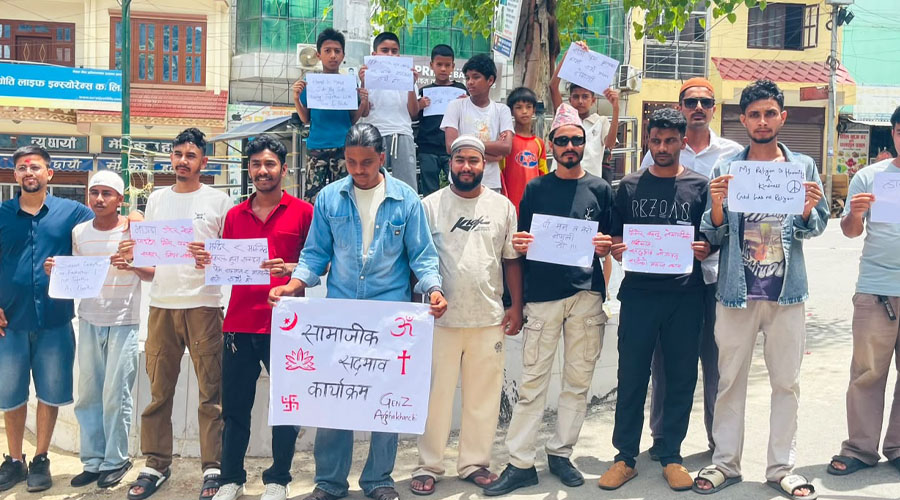
In Praise of Nepal’s Social Harmony
Translated from English, summarized and contextualized by DistantNews.
At a glance
Analysis
Sources not specified
Under investigation
- Nepal's strength lies in its diversity and the harmonious coexistence of various ethnicities, languages, cultures, and religions.
- The Constitution recognizes Nepal as a multi-ethnic, multilingual, multicultural, and multi-religious nation, emphasizing unity in diversity.
- Recent communal violence in Dewanganj, Sunsari, has raised concerns, highlighting the need for restraint, justice, and dialogue to preserve social harmony.
- Protecting social harmony requires responsible information sharing, verification of facts, and fair, transparent investigations into incidents.
Nepal's true strength resides not in its military might, economic power, or political sway, but in the profound trust, mutual respect, and peaceful coexistence that unite its people. The nation's greatest asset is its rich diversity, with people of different ethnicities, languages, cultures, and religions living together harmoniously for generations. This spirit of coexistence, where diverse faiths and cultures contribute to a shared national identity and celebrate each other's traditions, is fundamental to Nepal's character and must be safeguarded.
This commitment to social harmony is deeply embedded in Nepal's constitutional framework. The Constitution officially recognizes Nepal as a multi-ethnic, multilingual, multicultural, and multi-religious nation. It is founded on the principles of unity in diversity, equal rights, social justice, and respect for all religions and cultures, providing a robust foundation for national stability and unity.
History serves as a stark reminder of the devastating consequences of religious and ethnic conflict worldwide, marked by violence, displacement, and mistrust. Nepal, with its long-standing tradition of peaceful coexistence, must actively prevent such divisions from taking root. The recent communal violence in Dewanganj, Sunsari, which erupted on July 26th, has caused widespread concern. The incident escalated into deadly clashes, resulting in loss of life, injuries, and property damage, necessitating the deployment of security forces.
In the aftermath of the Dewanganj violence, protests, inflammatory rhetoric, and misinformation circulating on social media have further heightened tensions. This underscores the critical need for restraint, justice, and open dialogue to protect national unity and social harmony. Safeguarding this harmony demands responsibility from all citizens, media outlets, and public leaders. Rumors, hate speech, and deliberate attempts to sow division can rapidly escalate local disputes into wider communal conflicts. In the digital age, misinformation spreads instantaneously, making responsible verification and sharing of information paramount. As investigations into the Dewanganj incident continue, conclusions must be based on evidence, ensuring fair and transparent processes to hold those responsible accountable, thereby grounding lasting peace in truth and justice.
DistantNews Editorial
Originally published by OnlineKhabar English in English. Translated, summarized, and contextualized by our editorial team with added local perspective. Read our editorial standards.
More Stories


From Our Blog

What Gets Lost (and Found) When News Is Translated

The Critical Role of Diaspora Media in Global News

What Travellers Should Know About Countries with Restricted Press

A Digital Nomad's Guide to Following Local News

How the Same Story Looks Different in Different Countries
