


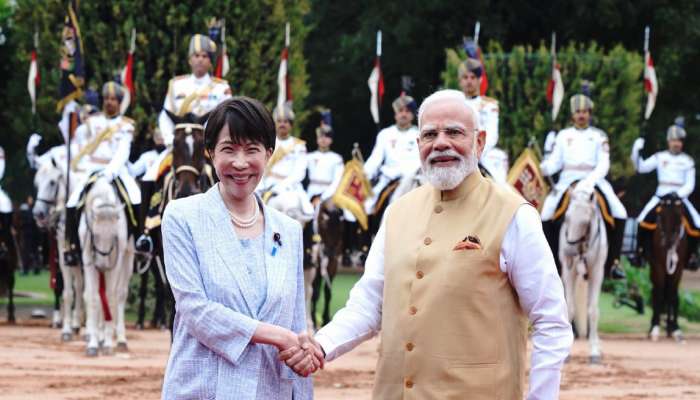
India, Japan stress free navigation through Strait of Hormuz
Summarized and contextualized by DistantNews.
At a glance
News
Named sources
New plan
- India and Japan jointly called for the protection of international shipping lanes, particularly the Strait of Hormuz.
- Both nations emphasized the strategic importance of open maritime trade for global commerce and energy security.
- The leaders also reaffirmed commitments to sustainable peace in West Asia and a two-state solution for the Israeli-Palestinian conflict.
Amid escalating tensions in West Asia and volatile global energy markets, India and Japan have issued a strong joint directive advocating for the absolute protection of international shipping lanes. The call came after the 16th India-Japan Annual Summit, where Prime Ministers Narendra Modi and Sanae Takaichi highlighted the critical need to keep the Strait of Hormuz open.
Recognizing their shared status as major energy-consuming nations impacted by volatility in global energy markets, the two Prime Ministers underscored the urgency of deepening India-Japan cooperation on energy security.
Both nations, as major energy-consuming economies, are particularly vulnerable to supply disruptions originating from West Asia. The joint statement explicitly warned against any geopolitical actions that could impede maritime trade. "Recognizing their shared status as major energy-consuming nations impacted by volatility in global energy markets, the two Prime Ministers underscored the urgency of deepening India-Japan cooperation on energy security," the statement read.
ensuring unimpeded freedom of navigation and uninterrupted flow of global commerce, including through the Strait of Hormuz, and opposing any restrictive measures hampering the flow of commercial vessels.
The leaders reiterated the importance of "ensuring unimpeded freedom of navigation and uninterrupted flow of global commerce, including through the Strait of Hormuz, and opposing any restrictive measures hampering the flow of commercial vessels." They also expressed enthusiasm for expanding cooperation across the energy value chain and strengthening the resilience of energy supply chains.
sustainable peace and stability
Furthermore, the prime ministers addressed the West Asia crisis, reaffirming their commitment to "sustainable peace and stability" in the region. They stressed the importance of securing free and safe navigation through the Strait of Hormuz, maintaining stable supply chains, and upholding international law. The leaders also emphasized advancing the reconstruction of Gaza and supporting a two-state solution, noting that "continued diplomatic efforts are indispensable to restoring stability at the earliest and achieving lasting peace in the region."
importance of securing free and safe navigation through the Strait of Hormuz, maintaining stable supply chains for energy and other essential goods, and upholding international law, in particular as reflected in UNCLOS
DistantNews Editorial
Originally published by Times of Oman. Summarized and contextualized by our editorial team with added local perspective. Read our editorial standards.
More Stories



From Our Blog

What Gets Lost (and Found) When News Is Translated

The Critical Role of Diaspora Media in Global News

What Travellers Should Know About Countries with Restricted Press

A Digital Nomad's Guide to Following Local News

How the Same Story Looks Different in Different Countries
