

India plans incentive scheme to boost domestic polysilicon manufacturing
Summarized and contextualized by DistantNews.
At a glance
News
Sources not specified
New plan
- India plans a production-linked incentive scheme to boost domestic polysilicon manufacturing.
- The move aims to reduce dependence on Chinese imports and deepen India's solar supply chain.
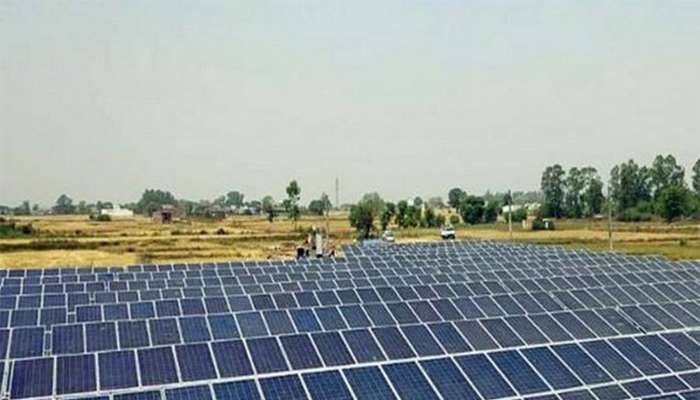
- The scheme could support over 10 GW of polysilicon production capacity, part of a broader effort to create an integrated solar manufacturing ecosystem.
India is preparing a production-linked incentive (PLI) scheme to stimulate domestic polysilicon manufacturing. This initiative aims to strengthen the country's solar supply chain and lessen its reliance on imports, particularly from China, according to Santosh Kumar Sarangi, secretary at the Ministry of New and Renewable Energy.
the country’s top clean energy ministry official said on Friday.
Sarangi announced the proposed scheme at a Confederation of Indian Industry event, suggesting it could back more than 10 GW of polysilicon production capacity. While the exact financial incentives remain undisclosed, the government's intention is clear: to foster a comprehensive domestic solar manufacturing ecosystem. This includes not only polysilicon but also ingots, wafers, cells, and modules, segments currently dominated by Chinese manufacturers globally.
the proposed scheme could support more than 10 GW of polysilicon production capacity
This effort aligns with India's ambitious renewable energy goals, including a target of 500 GW of non-fossil fuel power capacity by 2030. The country has already committed ₹240 billion ($2.52 billion) in incentives for solar panels and cells. Current solar module manufacturing capacity exceeds 200 GW, with an additional 100 GW of cell capacity expected soon. India also aims for at least 80 GW of solar ingot and wafer manufacturing capacity by June 2028.
India currently relies entirely on imports from China for the material.
Beyond solar energy, Sarangi highlighted that polysilicon also has applications in the semiconductor industry. This potential dual use could broaden the economic advantages of investing in domestic production, further enhancing India's industrial competitiveness and clean-energy manufacturing base.
Greater domestic production is intended to reduce exposure to imported equipment while strengthening the country's clean-energy manufacturing base and industrial competitiveness.
DistantNews Editorial
Originally published by Times of Oman. Summarized and contextualized by our editorial team with added local perspective. Read our editorial standards.
More Stories


From Our Blog

What Gets Lost (and Found) When News Is Translated

The Critical Role of Diaspora Media in Global News

What Travellers Should Know About Countries with Restricted Press

A Digital Nomad's Guide to Following Local News

How the Same Story Looks Different in Different Countries
