

India's FTAs to unlock $12 trillion export opportunity, says top trade negotiator
Translated from English, summarized and contextualized by DistantNews.
At a glance
News
Named sources
Context piece
- India's Chief FTA negotiator Darpan Jain stated that free trade agreements are crucial for the manufacturing sector's growth strategy.
- These agreements help overcome steep import duties imposed by developed economies on Indian labor-intensive sectors.
- India's FTA network has expanded significantly, now covering partner economies representing over $56 trillion in GDP and a $12 trillion import market.
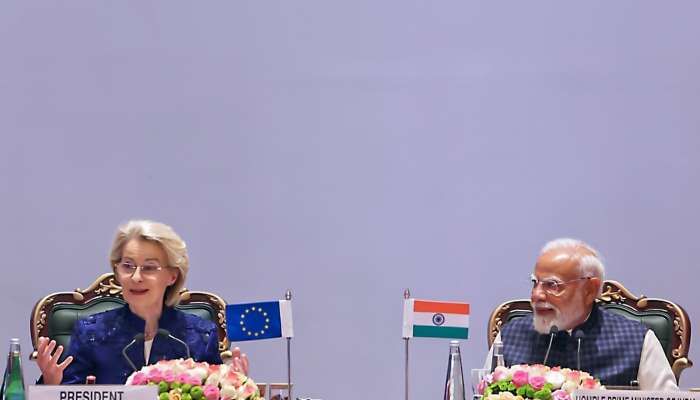
Free trade agreements (FTAs) are no longer an option but a necessity for India's manufacturing sector, according to Darpan Jain, India's Chief FTA negotiator. He emphasized that these pacts are vital for growth, offering significant gains in market access, investment, and regulatory alignment with partner nations.
Free trade agreements are no longer optional for India's manufacturing sector but essential to its growth strategy.
Jain highlighted that despite global tariff reductions, developed economies still impose substantial duties, ranging from 10 to 26 percent, on key Indian sectors like apparel, textiles, leather, marine products, and agriculture. India's expanding FTA network directly counters this disadvantage, providing exporters with predictability and smoother integration into global markets.
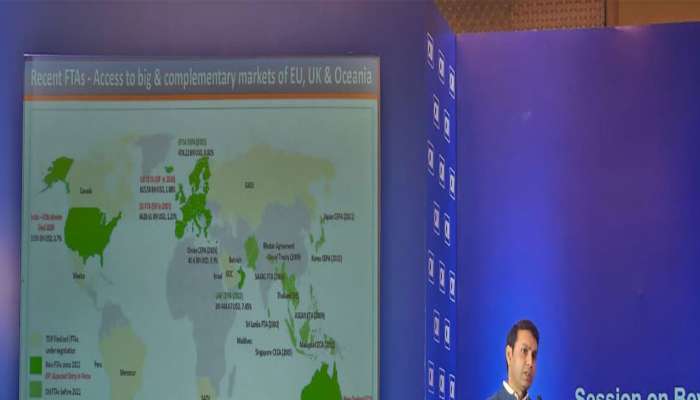
India's approach to FTAs has evolved dramatically. While pre-2010 agreements were limited in scope, since 2018, India has pursued comprehensive, deep FTAs covering goods, services, digital trade, sustainability, and investment. These modern agreements, like those with the UK and EU, are extensive and detailed.
India's expanding FTA network, he said, directly addresses this disadvantage while offering exporters predictability, investment linkages and smoother regulatory alignment with partner countries.
The impact is substantial. Previously, India's FTA partners represented a combined GDP of $10 trillion. Now, with numerous agreements concluded and more in negotiation, partner economies boast a GDP exceeding $56 trillion and a combined import market of $12 trillion, encompassing over two-thirds of global trade. Jain noted specific duty eliminations, such as up to 14 percent in textiles and 32 percent in marine products, with near-total tariff elimination secured with Australia, New Zealand, and the EU.
Prior to 2021, India's FTA partners represented a combined GDP of roughly USD 10 trillion and an import market of USD 5 trillion, mostly smaller, competing economies.
To further support industry, the government has launched a five-year, Rs 20,000 crore Export Promotion Mission. This initiative covers the entire export lifecycle, from market intelligence and regulatory compliance to financing and e-commerce support, demonstrating a concerted effort to capitalize on the opportunities presented by the new FTAs.
With eight FTAs concluded in the last five years and more under negotiation, India's partner economies now represent over USD 56 trillion in GDP and a USD 12 trillion import market, covering more than two-thirds of global trade.
DistantNews Editorial
Originally published by Times of Oman in English. Translated, summarized, and contextualized by our editorial team with added local perspective. Read our editorial standards.
More Stories

From Our Blog

What Gets Lost (and Found) When News Is Translated

The Critical Role of Diaspora Media in Global News

What Travellers Should Know About Countries with Restricted Press

A Digital Nomad's Guide to Following Local News

How the Same Story Looks Different in Different Countries
