

India's Skyroot Launches Vikram-1 in First Private Orbital Rocket Mission
Translated from English, summarized and contextualized by DistantNews.
At a glance
News
Named sources
Outcome reported
- Indian space startup Skyroot Aerospace successfully launched its Vikram-1 rocket on its first private orbital mission.
- The launch marks a significant step in India's ambition to compete in the global commercial space market.
- The mission validated the rocket's systems and successfully placed its payload into orbit, making India the third nation with private orbital launch capability.
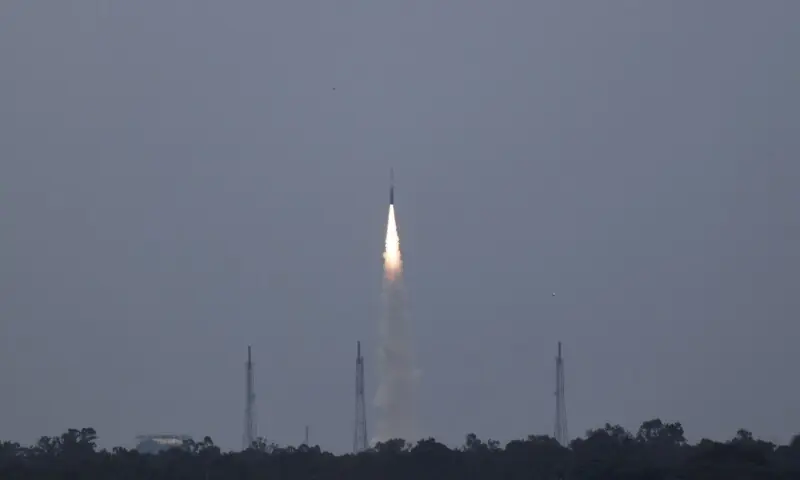
Indian space startup Skyroot Aerospace has successfully launched the Vikram-1, the country's first privately developed orbital rocket, in a mission dubbed "Mission Aagaman." This achievement is a crucial test for India's growing aspirations to secure a larger share of the global commercial launch market.
The Vikram-1 rocket lifted off from the Satish Dhawan Space Centre in Sriharikota, carrying multiple customer payloads and in-orbit experiments. Approximately 15 minutes after launch, it successfully injected its payload into a 450-kilometer orbit. This success positions India as the third country globally to achieve orbital launch capability through private enterprise.
The mission's primary objective was to validate the rocket's propulsion, avionics, telemetry, guidance, navigation, and control systems during flight. Skyroot Aerospace stated that the data collected will be vital for future commercial launches. The successful mission underscores the increasing capabilities and ambitions of India's private space sector.
Mission Aagaman is
DistantNews Editorial
Originally published by Dawn in English. Translated, summarized, and contextualized by our editorial team with added local perspective. Read our editorial standards.
More Stories

From Our Blog

What Gets Lost (and Found) When News Is Translated

The Critical Role of Diaspora Media in Global News

What Travellers Should Know About Countries with Restricted Press

A Digital Nomad's Guide to Following Local News

How the Same Story Looks Different in Different Countries
