


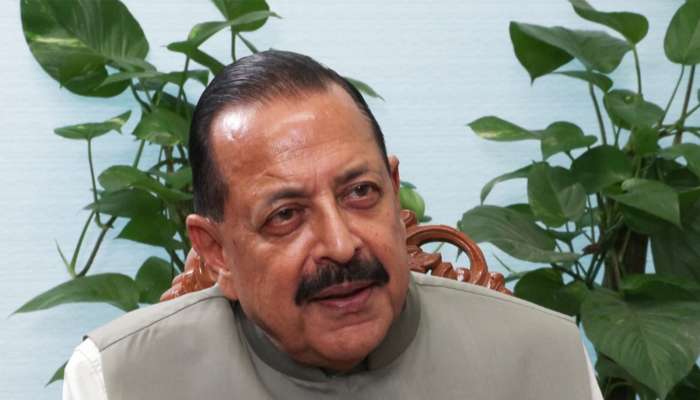
India's space economy to grow five-fold to $45 billion
Summarized and contextualized by DistantNews.
At a glance
News
Sources not specified
New plan
- India's space economy is projected to grow five-fold to $45 billion in the next 8-10 years.
- The biotechnology sector has already expanded significantly to $193 billion from $10 billion in 2014.
- India is also advancing its human spaceflight program, Gaganyaan, with a test mission planned this year and a human launch targeted for next year.
India's burgeoning space economy is on track to reach $45 billion within the next decade, a significant leap from its current valuation of around $9 billion. Union Minister Jitendra Singh highlighted this rapid growth, attributing it to the government's focus on technology-led development.
Our space economy was next to nothing. Today, it's around USD 9 billion, and it's accelerating at such a rapid pace that it appears we will reach USD 45 billion in the next eight to ten years.
Singh also pointed to the dramatic expansion of the biotechnology sector, which has surged to $193 billion from just $10 billion in 2014, a testament to supportive policies. "Our biotechnology economy was only US USD 10 billion in 2014 when this government came to power," he stated, emphasizing the success of the BioE3 policy.
Our biotechnology economy was only US USD 10 billion in 2014 when this government came to power.
Looking ahead, India is preparing for major milestones in its human spaceflight program, Gaganyaan. A test mission featuring the humanoid robot Vyommitra is scheduled before the year's end, paving the way for a potential human space launch next year. The minister also detailed the nation's long-term energy strategy, aiming for 10-11% of electricity from nuclear energy and 70-75% from renewables by 2047, while exploring ocean energy and pursuing a 2070 net-zero target.
I think next year, as part of Gaganyaan, we will also be able to send an Indian human to space.
DistantNews Editorial
Originally published by Times of Oman. Summarized and contextualized by our editorial team with added local perspective. Read our editorial standards.
More Stories

From Our Blog

What Gets Lost (and Found) When News Is Translated

The Critical Role of Diaspora Media in Global News

What Travellers Should Know About Countries with Restricted Press

A Digital Nomad's Guide to Following Local News

How the Same Story Looks Different in Different Countries
