


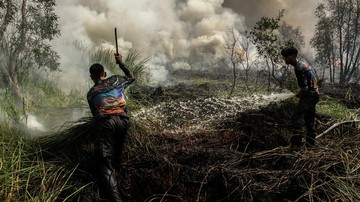
Indonesia: Forest Fire Hotspots Surge in Central Kalimantan
Translated from Indonesian and summarized by DistantNews. Read the original for the full story.
At a glance
News
Sources not specified
Context piece
- Indonesia's National Disaster Management Agency (BNPB) has recorded 3,947 hotspots from forest and land fires in Central Kalimantan.
- The fires have impacted over 7,634 hectares and contributed to a rise in acute respiratory infections (ISPA) in the region.
- Ground operations are underway to combat the fires, focusing on extinguishing flames and preventing their spread.
Central Kalimantan is facing a severe escalation of forest and land fires, with Indonesia's National Disaster Management Agency (BNPB) reporting a staggering 3,947 hotspots. This figure represents a substantial increase, with the agency noting an addition of 1,837 hotspots in the region.
For Central Kalimantan, the number of hotspots also increased by 1,837, bringing the total number of hotspots to 3,947.
The fires have already scorched an estimated area exceeding 7,634 hectares, according to data compiled on August 26. In addition to the hotspots, 81 "firespots" indicating active burning have been identified. The deteriorating air quality is evident, with visibility reduced to four kilometers.
The consequences of these fires extend beyond environmental damage, significantly impacting public health. In Kotawaringin Barat, Central Kalimantan, there has been a notable surge in acute respiratory infections (ISPA). The local health department reported approximately 515 ISPA cases in a single week, with the trend showing a significant increase between the 28th and 32nd weeks of the year.
Visibility is four kilometers.
Efforts to combat the fires are ongoing, with ground operations focused on extinguishing flames, limiting their spread, and cooling affected areas. These operations are reportedly concentrated in the Pulang Pisau, Seruyan, and Kapuas regions. The escalating situation underscores the urgent need for continued and intensified firefighting measures.
The trend of ISPA cases shows a fluctuating pattern with a fairly significant increase in weeks 28 to 32. The Health Office recorded around 515 ISPA cases in just one week.
About this summary
Originally published by CNN Indonesia in Indonesian. Translated, summarized, and contextualized automatically by DistantNews, with a note on how the source frames the story. Not individually reviewed before publishing. How this works.
More Stories


From Our Blog

What Gets Lost (and Found) When News Is Translated

The Critical Role of Diaspora Media in Global News

What Travellers Should Know About Countries with Restricted Press

A Digital Nomad's Guide to Following Local News

How the Same Story Looks Different in Different Countries
