

Indonesia government to take over state firm's stake in troubled China-funded high-speed railway
Summarized and contextualized by DistantNews.
At a glance
News
Official statement
New plan
- Indonesia's government will take over a controlling stake in the company operating its China-funded high-speed railway.
- The government aims to manage the railway's outstanding loans without using state budget funds.
- The project, connecting Jakarta and Bandung, has faced issues like land procurement problems, pandemic delays, and cost overruns.
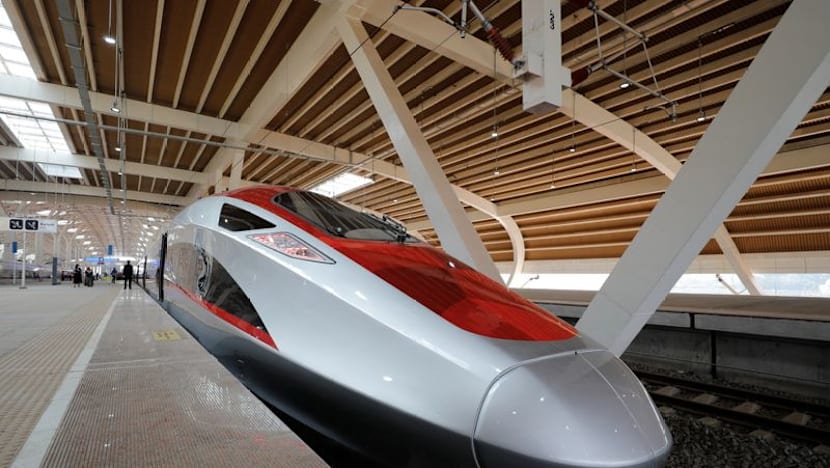
Indonesia's government is set to assume a controlling stake in PT KCIC, the operator of the US$7.3 billion China-funded high-speed railway, known commercially as "Whoosh." The move aims to address the project's financial challenges and ensure its operational stability.
Finance Minister Purbaya Yudhi Sadewa announced that an agency under his ministry will take over the 60 percent stake currently held by a consortium of Indonesian state companies. While the value of this stake was not disclosed, the appointed agency will be responsible for repaying the railway's outstanding loan. Crucially, Purbaya stated that the state budget will not be used for this repayment, indicating a plan to manage the debt through other financial mechanisms.
The appointed agency will be responsible for repaying the project's outstanding loan, but will not use the state budget.
The 142-kilometer railway connects the capital city, Jakarta, with Bandung, a city located southeast of the capital. The transaction is expected to be finalized by mid-September, according to Dony Oskaria, chief operating officer of the sovereign wealth fund Danantara, which oversees the Indonesian state firms involved.
The "Whoosh" project has been plagued by various difficulties since its inception. These include challenges in land procurement, delays caused by the COVID-19 pandemic, and significant cost overruns. Chinese state firms will retain their 40 percent stake in PT KCIC, maintaining a partnership in the ambitious infrastructure project.
The transaction will be completed at the latest by mid-September.
DistantNews Editorial
Originally published by CNA. Summarized and contextualized by our editorial team with added local perspective. Read our editorial standards.
More Stories



From Our Blog

What Gets Lost (and Found) When News Is Translated

The Critical Role of Diaspora Media in Global News

What Travellers Should Know About Countries with Restricted Press

A Digital Nomad's Guide to Following Local News

How the Same Story Looks Different in Different Countries
