

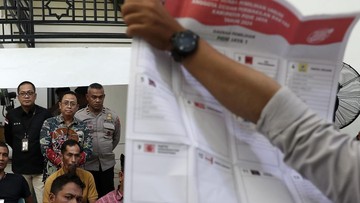

Indonesia's House of Representatives Approves Two Bills as Initiative Proposals
Translated from Indonesian and summarized by DistantNews. Read the original for the full story.
At a glance
News
Sources not specified
New plan
- The Indonesian House of Representatives (DPR) has officially designated two draft laws as its initiative proposals.
- These include the "One Data Indonesia" bill and a third amendment to the law on Traffic and Road Transportation (LLAJ).
- Both bills will now proceed to be discussed with the government, with the possibility of being debated during the upcoming recess period.
The Indonesian House of Representatives (DPR) has officially advanced two draft laws, designating them as initiative proposals for further discussion with the government. The decision was made during the 26th plenary meeting, marking the end of the V 2025-2026 session.
The two bills are the "One Data Indonesia" bill, proposed by the DPR's Legislative Body (Baleg), and a third amendment to Law Number 22 of 2009 concerning Traffic and Road Transportation (LLAJ). The plenary session was chaired by DPR Speaker Puan Maharani, accompanied by Deputy Speakers Sufmi Dasco Ahmad, Sari Yuliati, and Saan Mustopa.
Following the plenary session's approval, the government is expected to compile a list of inventory problems (DIM) for each bill. These documents will then be submitted to the DPR for joint deliberation. Deputy Speaker Sufmi Dasco Ahmad has granted permission for these bills to be discussed during the upcoming month-long recess period.
In addition to these two initiatives, the DPR also noted that the Asset Seizure Bill is under discussion in Commission III. Dasco mentioned that Commission III has been actively discussing this bill for the past two months, including receiving public participation. He indicated that other bills, including the "One Data" and Traffic and Transportation laws, are also slated for discussion during the recess.
About this summary
Originally published by CNN Indonesia in Indonesian. Translated, summarized, and contextualized automatically by DistantNews, with a note on how the source frames the story. Not individually reviewed before publishing. How this works.
More Stories


From Our Blog

News in Translation: What Gets Lost, and How We Keep the Framing

Diaspora Media: How Communities Abroad Follow Home

Traveling Where the Press Is Not Free: How to Read the News There

The Digital Nomad's Guide to Local News

The Same Story, Different Countries: How Coverage Changes at the Border
