


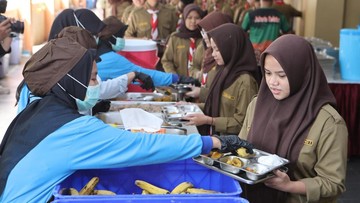
Indonesia to Continue Free Nutritious Meal Program, May Involve School Canteens
Translated from Indonesian, summarized and contextualized by DistantNews.
At a glance
News
Sources not specified
Context piece
- Indonesia's Minister of Basic and Secondary Education, Abdul Mu'ti, confirmed the continuation of the Free Nutritious Meal (MBG) program.
- The program, serving approximately 43.4 million students, will see adjustments, potentially involving school canteens in food provision.
- Mu'ti addressed past food poisoning incidents, stating that only problematic kitchens would be evaluated, not the entire program.
Indonesia's Minister of Basic and Secondary Education, Abdul Mu'ti, has affirmed that the Free Nutritious Meal (MBG) program will continue, citing broad support from students. The program currently benefits around 43.4 million students, representing over 80% of the total student population.
The number of students receiving MBG is around 43.4 million out of a total of 53.5 million students in Indonesia, or about 80.94 percent. The majority hope this program continues.
Mu'ti announced that while the program's continuation is assured, adjustments will be made to its implementation. One significant change under consideration is the potential involvement of school canteens in providing nutritious meals. This move aims to streamline the process and ensure more targeted delivery of the program's benefits.
The minister also addressed concerns regarding past food poisoning incidents. He clarified that such isolated cases would not lead to the program's cancellation. Instead, the focus will be on evaluating and rectifying issues with specific food providers. Kitchens failing to meet standards could face operational permit revocation, while well-performing facilities will continue their operations.
If there is poisoning, it is the incorrect kitchen that is stopped for evaluation, while the good SPPG continues. In fact, kitchens that do not meet standards can have their operational permits revoked.
Mu'ti emphasized the MBG program's crucial role in fostering the quality of Indonesia's younger generation, focusing on both academic and physical development. He believes that by ensuring proper nutrition, the program contributes to the healthy growth of Indonesian children, preparing them for future competitiveness.
This generation must be built both academically and physically. The physical is built through MBG, so that Indonesian children can grow healthy and be ready to compete in the future.
DistantNews Editorial
Originally published by CNN Indonesia in Indonesian. Translated, summarized, and contextualized by our editorial team with added local perspective. Read our editorial standards.
More Stories


From Our Blog

What Gets Lost (and Found) When News Is Translated

The Critical Role of Diaspora Media in Global News

What Travellers Should Know About Countries with Restricted Press

A Digital Nomad's Guide to Following Local News

How the Same Story Looks Different in Different Countries
