


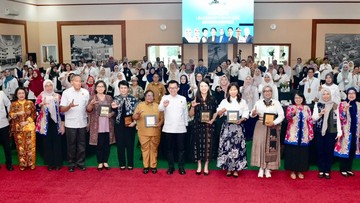
Indonesia urges stronger, transformative women's leadership in local government
Translated from Indonesian, summarized and contextualized by DistantNews.
At a glance
News
Sources not specified
Context piece
- Indonesia's Deputy Home Affairs Minister Ribka Haluk urged strengthening transformative and inspiring women's leadership in local governments.
- She emphasized that transformation is key to empowering women as drivers of change in regional governance, aligning with national goals for human resource development and equal opportunities.
- Haluk called for research to identify factors hindering women's advancement in leadership and to improve policies for gender equality, aiming for Indonesia's Golden Era in 2045.
Indonesia's Deputy Home Affairs Minister Ribka Haluk is pushing for a stronger, more transformative approach to women's leadership within regional governments. Speaking at the Women's Leadership Forum 2026 in Jakarta, Haluk highlighted "transformation" as the crucial element needed to cultivate female leaders capable of driving change in local governance.
Haluk stated that this initiative aligns with the government's "Asta Cita" agenda, which prioritizes human resource development and ensures equal opportunities for women to contribute to leadership roles. She noted the increasing number of women in regional leadership positions across Indonesia's 552 provinces and regencies/cities. However, she cautioned that the challenge extends beyond mere numbers, emphasizing the need for equitable distribution of authority in strategic positions.
Drawing from her own career in the bureaucracy, Haluk observed that fewer women reach higher leadership levels. She believes that clear life planning, strong motivation, and continuous capacity building, including education, are essential for women to overcome these barriers. To better understand these obstacles, she urged research institutions, such as the National Research and Innovation Agency (BRIN) and the Institute of Public Administration (LAN), to conduct studies.
The findings from such research, she explained, would provide valuable input for relevant ministries, including the Home Affairs Ministry, the Ministry of Administrative and Bureaucratic Reform, and the Ministry of Women's Empowerment and Child Protection. The goal is to strengthen affirmative policies and promote gender equality in preparation for "Indonesia Emas 2045" (Indonesia's Golden Era 2045). Haluk stressed the importance of data-driven policy-making to influence regulations and accelerate the transformation of women's leadership.
DistantNews Editorial
Originally published by CNN Indonesia in Indonesian. Translated, summarized, and contextualized by our editorial team with added local perspective. Read our editorial standards.
More Stories



From Our Blog

What Gets Lost (and Found) When News Is Translated

The Critical Role of Diaspora Media in Global News

What Travellers Should Know About Countries with Restricted Press

A Digital Nomad's Guide to Following Local News

How the Same Story Looks Different in Different Countries
