


Indonesian Activist Calls for End to Higher Education Commercialization
Translated from Indonesian, summarized and contextualized by DistantNews.
At a glance
News
Official statement
Context piece
- Lukman Hakim Saifuddin, an activist, argues for a return to the constitutional mandate of higher education in Indonesia, urging an end to commercialization and liberalization.
- He highlights the issue of tens of thousands of admitted students not enrolling, suggesting a need to re-evaluate tuition fees (UKT) amid economic uncertainty.
- Saifuddin calls for higher education to be viewed as a strategic national investment, not a commercial venture, and for tuition fee structures to better reflect families' financial capabilities.
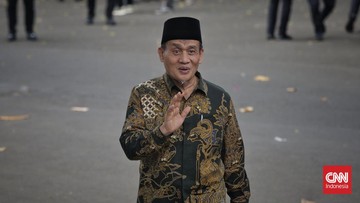
Lukman Hakim Saifuddin, an activist with the Gerakan Nurani Bangsa (Nation's Conscience Movement), asserts that while improving university management policies is necessary, the more fundamental issue is restoring higher education's original paradigm in Indonesia. He calls for an end to the practices of commercialization and liberalization within the university system.
The improvement of management policies in our university world is a necessity. However, what is more fundamental is to realign our higher education paradigm.
Saifuddin points to a concerning trend of tens of thousands of students who passed the national entrance exams but failed to register, deeming it a serious alarm for the government. He suggests this situation necessitates a thorough evaluation of higher education financing, particularly the Single Tuition Fee (UKT) system. Amidst declining public purchasing power, business uncertainty, and widening wealth disparities, Saifuddin argues that the commercialization and liberalization of higher education must cease immediately.
In the midst of declining public purchasing power, business and trade uncertainty, and widening welfare gaps, the liberalization and commercialization of higher education must be abolished immediately.
He stresses that the nation cannot afford to lose educated young generations due to financial barriers. Saifuddin advocates for the government to prioritize higher education as a strategic national investment rather than a commercial space that places undue pressure on middle and lower-income families. The government, he insists, must return to the constitutional mandate, ensuring that the principle of social justice is genuinely reflected in the financial support for higher education.
The government is urged to return the paradigm of education from commercialization and liberalization to the mandate of the constitution. The principle of social justice must be truly reflected in the affirmation of higher education financing.
Furthermore, Saifuddin criticizes the current UKT system, stating that its tiers often do not accurately represent students' real financial capabilities. He notes that some middle-income families, such as those of civil servants, face tuition fees nearly as high as those from more affluent economic groups. He urges that the UKT amounts should not contradict the actual financial conditions of students' families.
The amount of UKT should not be contrary to the real financial capabilities of the students' families.
DistantNews Editorial
Originally published by Republika in Indonesian. Translated, summarized, and contextualized by our editorial team with added local perspective. Read our editorial standards.
More Stories


From Our Blog

What Gets Lost (and Found) When News Is Translated

The Critical Role of Diaspora Media in Global News

What Travellers Should Know About Countries with Restricted Press

A Digital Nomad's Guide to Following Local News

How the Same Story Looks Different in Different Countries
