


Indonesian activist Islah Bahrawi questioned by police in sedition probe
Translated from Indonesian, summarized and contextualized by DistantNews.
At a glance
News
Sources not specified
Under investigation
- Islah Bahrawi, Executive Director of the Indonesian Moderate Network, appeared before investigators at the Metro Jaya Regional Police on June 10, 2026, as a witness in a sedition case.
- His lawyer stated the report against Bahrawi concerns remarks made at a gathering, arguing they do not constitute sedition under the Criminal Code.
- The case is similar to one involving Saiful Mujani, who was also summoned for comments made at the same event regarding political change.
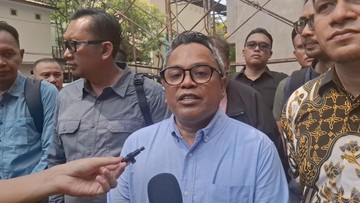
Islah Bahrawi, Executive Director of the Indonesian Moderate Network, appeared before investigators at the Metro Jaya Regional Police on June 10, 2026. He was questioned as a witness in an investigation into alleged sedition against the authorities.
The report was filed by several parties, we don't know who.
Bahrawi's lawyer, Tegar Putuhena, explained that the report against his client stemmed from statements made during a recent gathering of observers in Utan Kayu. "The report was filed by several parties, we don't know who," Tegar told reporters on Wednesday.
Putuhena argued that Bahrawi's statements did not meet the elements of sedition as defined by Article 246 of the Criminal Code. "It seems unlikely that this article would be forced," he said, adding that they respected the legal process. Bahrawi himself stated that his remarks were intended as criticism, not as an incitement to violence. "So there was no intention to incite anything," he said.
It seems unlikely that this article would be forced.
This case follows a similar investigation into Saiful Mujani, founder of Saiful Mujani Research Center and Consulting. Mujani was also summoned for comments made at the same event, where he discussed ways to save Indonesia, suggesting that removing Prabowo from government could be a solution. Mujani's lawyer, Todung Mulya Lubis, urged the police to drop the case, asserting that his client's statements fell within the bounds of freedom of expression and did not constitute sedition or treason.
So there was no intention to incite anything.
DistantNews Editorial
Originally published by Tempo in Indonesian. Translated, summarized, and contextualized by our editorial team with added local perspective. Read our editorial standards.
More Stories


From Our Blog

What Gets Lost (and Found) When News Is Translated

The Critical Role of Diaspora Media in Global News

What Travellers Should Know About Countries with Restricted Press

A Digital Nomad's Guide to Following Local News

How the Same Story Looks Different in Different Countries
