


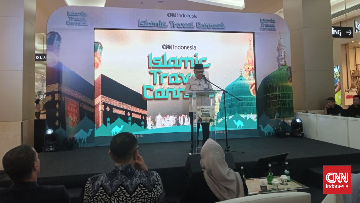
Indonesian Hajj and Umrah turnover reaches Rp78 trillion, minister says
Translated from Indonesian, summarized and contextualized by DistantNews.
At a glance
News
Named sources
New plan
- The Indonesian Minister of Hajj and Umrah estimates the annual economic turnover for Hajj and Umrah services reaches Rp78 trillion (approximately $4.7 billion USD).
- President Prabowo Subianto has urged that this significant economic value should benefit society more broadly.
- The government is developing legal frameworks and digital platforms to enhance the economic ecosystem of Hajj and Umrah, aiming to keep spending within Indonesia.
Indonesia's Minister of Hajj and Umrah, Mochamad Irfan Yusuf, announced that the annual economic turnover generated by Hajj and Umrah services in the country is estimated to be around Rp78 trillion (approximately $4.7 billion USD).
Minister Yusuf highlighted that President Prabowo Subianto has instructed that this substantial economic activity must yield broader benefits for the Indonesian community. He calculated the figure based on an average of 2 million Umrah pilgrims spending an average of Rp30 million each, totaling Rp60 trillion, added to Rp18 trillion for Hajj pilgrims.
If I take an average of 2 million (Umrah pilgrims) with prices varying between Rp25 million and Rp100 million, let's take Rp30 million as the average, that means Rp60 trillion. Rp60 trillion for Umrah, Rp18 trillion for Hajj, meaning Rp78 trillion in money turnover. A fairly large turnover, and the President hopes that the community feels something.
To foster a more robust economic ecosystem for these religious journeys, the government is actively drafting regulations, including a draft government regulation specifically on the organization of the Hajj and Umrah economic ecosystem. This regulation is intended to serve as a foundation for an integrated system that maximizes economic advantages for the nation.
Furthermore, the Ministry of Hajj is developing digital platforms to support this ecosystem. One initiative is a dedicated platform for Hajj souvenirs, designed to create a collaborative space between national businesses and the needs of pilgrims. The goal is to encourage pilgrims to purchase souvenirs within Indonesia, thereby retaining their spending domestically rather than abroad. Minister Yusuf stated, "We hope that Hajj pilgrims will no longer need to buy souvenirs there. We hope they buy souvenirs through our platform here. The goods are the same, and most of the goods there are also domestic products, so we are trying to ensure they don't need to go there, because it means wasting our money there. We hope that the money of Hajj pilgrims can be mostly spent in the homeland."
We hope that Hajj pilgrims will no longer need to buy souvenirs there. We hope they buy souvenirs through our platform here. The goods are the same, and most of the goods there are also domestic products, so we are trying to ensure they don't need to go there, because it means wasting our money there. We hope that the money of Hajj pilgrims can be mostly spent in the homeland.
DistantNews Editorial
Originally published by CNN Indonesia in Indonesian. Translated, summarized, and contextualized by our editorial team with added local perspective. Read our editorial standards.
More Stories


From Our Blog

What Gets Lost (and Found) When News Is Translated

The Critical Role of Diaspora Media in Global News

What Travellers Should Know About Countries with Restricted Press

A Digital Nomad's Guide to Following Local News

How the Same Story Looks Different in Different Countries
