


Indonesian Legal Experts Caution Over MPR-Constitutional Court MoU on Interpretation Authority
Translated from Indonesian, summarized and contextualized by DistantNews.
At a glance
News
Named sources
New plan
- Leaders from Indonesia's People's Consultative Assembly (MPR) met with the Constitutional Court (MK) to discuss their respective authorities regarding constitutional interpretation and amendment.
- A Memorandum of Understanding (MoU) was signed, aiming to involve the MPR in the MK's constitutional interpretations and decisions.
- Legal experts expressed concerns that the MoU could potentially position the MPR as the sole authoritative interpreter of constitutional amendments, undermining the MK's role.
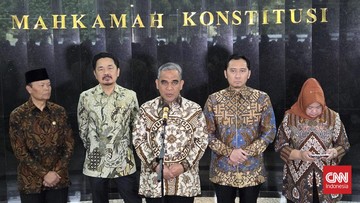
Leaders from Indonesia's People's Consultative Assembly (MPR) visited the Constitutional Court (MK) to discuss institutional boundaries concerning the interpretation and amendment of the 1945 Constitution. The meeting also served to extend an invitation to the MK for the upcoming annual session of the MPR in August.
We have signed [MoU], I as the Chairman of the MPR, Pak Suhartoyo as the Chairman of the MK, an MoU between the MPR and the MK regarding copies of MK decisions which the MPR also receives copies of, and in many cases the MPR will be asked for its input in the MK in formulating the operative parts of those decisions.
A key outcome of the meeting was the signing of a Memorandum of Understanding (MoU). This agreement stipulates that the MPR will be involved in the MK's interpretation of the constitution and its decisions. MPR Chairman Ahmad Muzani stated that the MoU ensures the MPR receives copies of MK decisions and will be consulted when the MK formulates the operative parts of its rulings.
If I read the intention behind it, there is an impression that when the MPR met with the MK, it was actually stating, it was reinforcing that if the MK needs an interpretation of a process of a petition in the MK, then it seems like it wants to say don't hesitate to involve the MPR.
However, the MoU has drawn critical commentary from legal experts. Herdiansyah Hamzah, also known as Castro, a member of the Constitutional and Administrative Law Society (CALS), noted that while Article 54 of the Constitutional Court Law allows the MK to seek information from the MPR, the intent behind this MoU might be different. Castro suspects an effort to establish the MPR as the ultimate authority on interpreting constitutional amendments, potentially leading to it becoming the sole interpreter.
Actually, if we read it from political psychology, this is a kind of effort to make the MPR an institution that, in quotes, more authoritatively explains interpretations of changes or amendments to the Constitution.
Castro, who is also a law lecturer at Mulawarman University, emphasized that the MK can interpret the constitution by examining legislative records and documents, such as the "Memorie van Toelichting" (MvT), which explains the background and intent behind laws. He argued that not all current MPR members were involved in past amendments, suggesting that relying on existing documentation should suffice for the MK's interpretive process.
That is actually the intention of this meeting, as if to confirm the authority over interpretation, which could ultimately become a sole interpretation.
DistantNews Editorial
Originally published by CNN Indonesia in Indonesian. Translated, summarized, and contextualized by our editorial team with added local perspective. Read our editorial standards.
More Stories


From Our Blog

What Gets Lost (and Found) When News Is Translated

The Critical Role of Diaspora Media in Global News

What Travellers Should Know About Countries with Restricted Press

A Digital Nomad's Guide to Following Local News

How the Same Story Looks Different in Different Countries
