


Indonesian Ministry of Defense Investigates Deaths in Military Training Program
Translated from Indonesian, summarized and contextualized by DistantNews.
At a glance
News
Official statement
Under investigation
- Indonesia's Ministry of Defense is investigating the deaths of three participants in a military-style training program for village cooperative managers.
- The training, part of the Sarjana Penggerak Pembangunan Indonesia (SPPI) program, aimed to build character and discipline.
- The ministry expressed condolences and pledged to evaluate training methods to ensure participant safety.
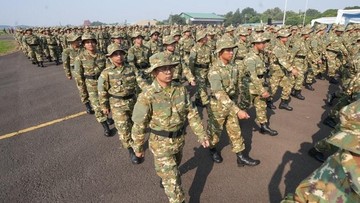
Indonesia's Ministry of Defense (Kemenhan) is taking serious notice of the deaths of three participants during a military-style basic training (Latsarmil) for prospective managers of village cooperatives. The ministry has expressed deep condolences and committed to a thorough evaluation of the training methods to prevent future tragedies.
The Latsarmil program, part of the Sarjana Penggerak Pembangunan Indonesia (SPPI) initiative, involved 674 participants. Its stated goals were to instill integrity, loyalty, discipline, teamwork, and empathy in future managers of Koperasi Desa Merah Putih (KDMP) and Kampung Nelayan Merah Putih (KNMP).
Currently, Kemenhan, together with the National Selection Committee and all organizers, is conducting a comprehensive evaluation of the program's implementation.
Brigadier General TNI Rico Ricardo Sirait, Head of the Ministry's Information Bureau, stated that Kemenhan, along with the National Selection Committee and organizers, is conducting a comprehensive review of the program's execution. "Currently, Kemenhan, together with the National Selection Committee and all organizers, is conducting a comprehensive evaluation of the program's implementation," he said in a statement on Friday (June 26, 2026).
The evaluation will specifically focus on health aspects, from initial selection to medical care during the training. "Especially on the aspects of health selection, medical supervision, early detection of participants' health conditions, and handling procedures if participants experience health problems," Rico added. He emphasized that the program's core curriculum is designed to foster character, discipline, and a spirit of service, not to train soldiers.
Especially on the aspects of health selection, medical supervision, early detection of participants' health conditions, and handling procedures if participants experience health problems.
DistantNews Editorial
Originally published by Republika in Indonesian. Translated, summarized, and contextualized by our editorial team with added local perspective. Read our editorial standards.
More Stories


From Our Blog

What Gets Lost (and Found) When News Is Translated

The Critical Role of Diaspora Media in Global News

What Travellers Should Know About Countries with Restricted Press

A Digital Nomad's Guide to Following Local News

How the Same Story Looks Different in Different Countries
