

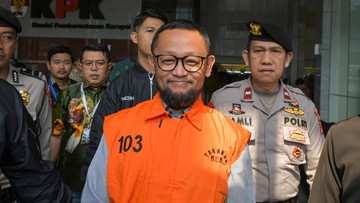

Indonesian Ombudsman Ethics Council to Question Chairman Over Nickel Corruption Case
Translated from Indonesian and summarized by DistantNews. Read the original for the full story.
At a glance
News
Named sources
Context piece
- The Ethics Council of the Indonesian Ombudsman (ORI) will question the non-active Chairman of ORI, Hery Susanto, on Monday regarding a nickel corruption case.
- The examination aims to determine if Hery Susanto's actions violated the code of ethics and the severity of any breach.
- The Council has gathered information from various parties and is attempting to persuade Hery to resign, with the final decision to be sent to President Prabowo Subianto.
The Indonesian Ombudsman's Ethics Council is set to scrutinize its own non-active Chairman, Hery Susanto, in connection with a nickel corruption allegation. Scheduled for Monday, this examination in Jakarta is a critical step in the Council's process to ascertain the extent of Hery's alleged ethical breaches and their severity.
The purpose of this examination is to determine whether Hery Susanto's actions violated the code of ethics and how severe the violation is.
Led by figures like Jimly Asshiddiqie, the Council has been diligently gathering evidence, engaging with Hery's family, the House of Representatives, and the selection committee for future Ombudsman members. Their efforts also include a delicate approach to Hery's family, urging him to step down gracefully, though a resolution remains elusive after two weeks of attempts.
This internal investigation is paramount for restoring public trust in the Indonesian Ombudsman, an institution tasked with overseeing public service quality. The Council's findings will culminate in a plenary meeting to formulate binding recommendations, which will then be forwarded to President Prabowo Subianto for a final presidential decree.
If Hery does not attend, his legal advisor can represent him. However, if the legal advisor also does not attend, the Ethics Council will directly draw conclusions without rescheduling the examination.
From an Indonesian perspective, this case highlights the internal mechanisms designed to maintain integrity within state institutions. While Western media might focus on the corruption aspect, here in Indonesia, the emphasis is also on the procedural fairness and the institutional self-correction process. The swift and transparent resolution of this matter is crucial for public confidence, especially given the Ombudsman's role in ensuring good governance across the archipelago. The outcome will undoubtedly be closely watched, reflecting the nation's commitment to accountability.
We hope that with the swift resolution of this problem, public trust in the Indonesian Ombudsman can be restored soon.
About this summary
Originally published by Republika in Indonesian. Translated, summarized, and contextualized automatically by DistantNews, with a note on how the source frames the story. Not individually reviewed before publishing. How this works.
More Stories


From Our Blog

News in Translation: What Gets Lost, and How We Keep the Framing

Diaspora Media: How Communities Abroad Follow Home

Traveling Where the Press Is Not Free: How to Read the News There

The Digital Nomad's Guide to Local News

The Same Story, Different Countries: How Coverage Changes at the Border
