

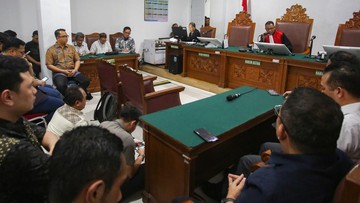

Indonesian Parliament Pushes for Transparency and Legal Protection in Asset Forfeiture Bill
Translated from Indonesian and summarized by DistantNews. Read the original for the full story.
At a glance
News
Named sources
New plan
- Indonesian lawmakers are emphasizing transparency and legal safeguards in the proposed Asset Forfeiture Bill.
- The bill aims to allow the state to recover illicit assets even if perpetrators are deceased or have fled, using non-conviction based (NCB) civil proceedings.
- Lawmakers stress the need for clear evidence standards, rights to objection, and protection for third parties to ensure fairness.
Rieke Diah Pitaloka, a member of Commission XIII of the Indonesian House of Representatives (DPR RI), highlighted the critical need for transparency, clear evidentiary standards, and judicial oversight in the implementation of non-conviction based (NCB) mechanisms within the proposed Asset Forfeiture Bill. She described the bill as a vital instrument enabling the state to recover assets derived from criminal activities, even when the perpetrators are no longer alive or have absconded.
Pitaloka explained that the NCB mechanism, which involves civil lawsuits against assets, is necessary to ensure that assets suspected of originating from criminal acts can be recovered. "This Asset Forfeiture Bill is not merely a technical regulation, but an important instrument to ensure the state does not lose to criminals," she stated. "Assets from criminal acts must be confiscated, even if the perpetrators have died or fled. However, evidentiary standards and judicial control must be maintained to prevent injustice."
This Asset Forfeiture Bill is not merely a technical regulation, but an important instrument to ensure the state does not lose to criminals. Assets from criminal acts must be confiscated, even if the perpetrators have died or fled. However, evidentiary standards and judicial control must be maintained to prevent injustice.
Furthermore, Pitaloka stressed that the application of NCB must be accompanied by measurable evidentiary standards, the right to object for those whose assets are seized, and protection for bona fide third parties. She asserted that while the state must be robust in confiscating criminal proceeds, the law must also strongly protect citizens' rights. The system must ensure that all recovered assets can be traced and ultimately returned to the state, victims, or rightful legal owners.
The bill has garnered public attention, particularly following protests demanding its passage. Deputy Speaker of the DPR RI, Sufmi Dasco Ahmad, has affirmed the parliament's commitment to finalizing the bill, targeting its ratification by December 15, 2026. The proposed legislation aims to close loopholes where criminal proceeds cannot be seized through criminal proceedings alone, especially when perpetrators are deceased or have fled, by allowing asset forfeiture through civil processes.
We must ensure that members of the public who own legitimate assets are not disadvantaged. Protection for third parties is an absolute requirement for this bill to be fair and not create new fears.
About this summary
Originally published by Republika in Indonesian. Translated, summarized, and contextualized automatically by DistantNews, with a note on how the source frames the story. Not individually reviewed before publishing. How this works.
More Stories


From Our Blog

What Gets Lost (and Found) When News Is Translated

The Critical Role of Diaspora Media in Global News

What Travellers Should Know About Countries with Restricted Press

A Digital Nomad's Guide to Following Local News

How the Same Story Looks Different in Different Countries
